
What's Happening?
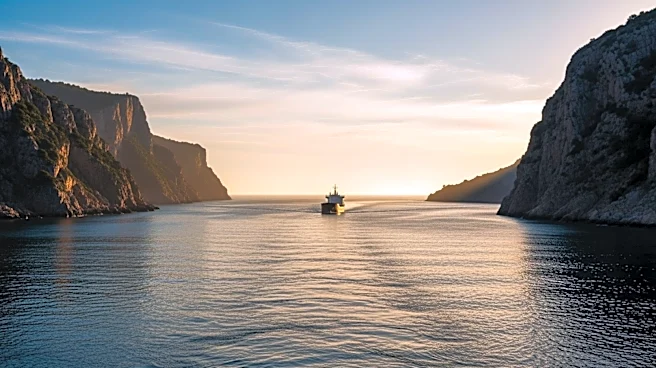
Iran has announced that the Strait of Hormuz will remain closed until the United States lifts its blockade of Iranian ports. This decision comes amidst ongoing negotiations between Iran and the U.S., which
have yet to reach a final peace agreement. The closure of the strait, a critical maritime trade route, has significant implications for global oil and liquefied natural gas transit. Iran's parliament speaker, Mohammad Bagher Ghalibaf, indicated that while there has been progress in talks, substantial gaps remain. The situation follows a temporary ceasefire that allowed limited transit through the strait, which was reversed after President Trump insisted on maintaining the blockade. Iran's Revolutionary Guards have warned that any unauthorized passage through the strait will be considered hostile, and offending vessels will be targeted.
Why It's Important?
The closure of the Strait of Hormuz is a pivotal development in the ongoing geopolitical tensions between Iran and the United States. As a major chokepoint for global oil and gas shipments, its closure can lead to significant disruptions in energy markets, potentially driving up prices and affecting economies worldwide. The U.S. blockade of Iranian ports further exacerbates the situation, impacting Iran's economy and its ability to engage in international trade. The standoff highlights the fragile nature of Middle Eastern geopolitics and the potential for escalation into broader conflict, which could have far-reaching consequences for regional stability and global energy security.
What's Next?
Negotiations between Iran and the United States are expected to continue, with both sides seeking a resolution to the blockade and the reopening of the Strait of Hormuz. Diplomatic efforts by countries like Egypt and Pakistan may play a role in mediating the conflict. The international community will be closely monitoring the situation, as any agreement could lead to a resumption of normal maritime trade and a stabilization of energy markets. However, the risk of further military confrontations remains, particularly if Iran perceives continued U.S. actions as aggressive or if negotiations stall.
Beyond the Headlines
The closure of the Strait of Hormuz underscores the strategic importance of maritime routes in global trade and the vulnerability of these chokepoints to geopolitical conflicts. It also highlights the complex interplay between military actions and diplomatic negotiations in resolving international disputes. The situation raises ethical questions about the use of economic blockades as a tool of foreign policy and their impact on civilian populations. Long-term, the conflict may prompt discussions on diversifying energy sources and routes to reduce dependency on volatile regions.