







What's Happening?
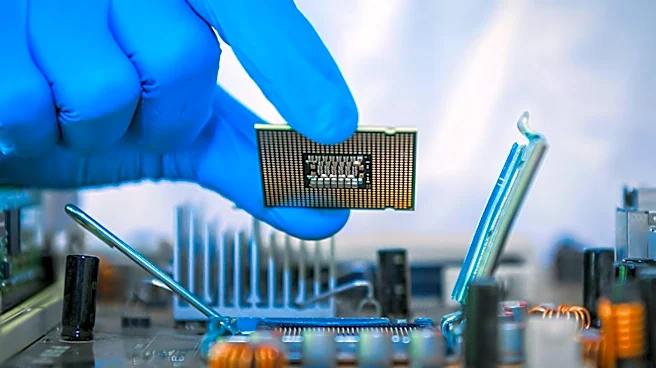
IBM's Nighthawk r2 quantum processor has demonstrated a significant milestone in quantum computing by completing a complex calculation in 19 seconds that would take the world's fastest supercomputer, Frontier, approximately 110 years. This achievement,
detailed in a preprint on arXiv by a research team led by Tigran Sedrakyan of BlueQubit, involved random circuit sampling (RCS) experiments using 61 qubits and up to 40 cycles deep. The most impactful results were observed at 36 cycles, where 918 two-qubit gates were utilized to generate 1 million samples. Unlike previous demonstrations of quantum advantage, this experiment was conducted on a commercial processor accessible via a cloud service, without specialized laboratory equipment or custom calibration. The researchers published all circuits, samples, and analysis code, aiming for reproducibility by non-expert users. The fidelity of the quantum signal at 36 cycles was approximately 0.23%, indicating a detectable quantum signature even as information gradually washes out in noisy quantum circuits. This experiment highlights the growing maturity of commercial quantum computing infrastructure.
Why It's Important?
This breakthrough by IBM signifies a crucial step in the practical application and accessibility of quantum computing. The demonstration of quantum advantage on a commercially available cloud platform makes this advanced technology more accessible to a broader range of users, moving it beyond specialized research labs. This accessibility could accelerate innovation in various fields, as more researchers and developers can experiment with quantum processors. While the achievement is specific to random circuit sampling and does not imply general-purpose computational superiority over classical computers, it validates the potential of quantum machines for certain complex tasks. The ability to reproduce these results in a standard cloud environment lays the groundwork for wider adoption and further development of quantum algorithms. This could lead to advancements in areas like materials science, drug discovery, and financial modeling, where such complex calculations are critical. The U.S. stands to gain significantly from this progress, as it reinforces its position at the forefront of quantum technology development and commercialization, potentially fostering new industries and economic opportunities.
What's Next?
The immediate next step involves the peer review of the research team's findings, which were posted on arXiv. If validated, this will further solidify the credibility of the quantum advantage demonstration. The open publication of circuits, samples, and analysis code encourages other research teams to independently reproduce similar experiments, which could lead to a rapid expansion of quantum computing research and application development. IBM's strategy of providing commercial quantum processors via cloud services suggests a continued push towards making quantum computing more widely available. This could lead to increased investment in quantum hardware and software development, as well as the creation of new educational programs to train a workforce capable of utilizing these advanced systems. The integration of quantum systems with existing supercomputing infrastructure, as seen with RIKEN's Center for Computational Science in Japan installing an IBM Quantum System Two alongside the Fugaku supercomputer, indicates a future where hybrid quantum-classical computing environments become more common. This will enable researchers to leverage the strengths of both classical and quantum systems for even more complex problems.
Beyond the Headlines
This development has profound implications beyond immediate computational speed. The shift from specialized lab equipment to commercially accessible cloud platforms democratizes quantum computing, potentially fostering a new era of innovation where smaller companies and academic institutions can contribute to quantum advancements. This could lead to unexpected applications and breakthroughs, as diverse minds gain access to these powerful tools. Furthermore, the focus on error correction and the ability to maintain quantum signal fidelity in noisy environments are critical for the long-term viability of quantum computing. As quantum computers become more robust and accessible, they will challenge existing paradigms in cybersecurity, potentially rendering current encryption methods obsolete, while simultaneously enabling new, more secure communication protocols. The ethical considerations surrounding the power of quantum computing, particularly in areas like artificial intelligence and materials design, will also become increasingly prominent, necessitating careful governance and responsible development to ensure societal benefit.