
What's Happening?
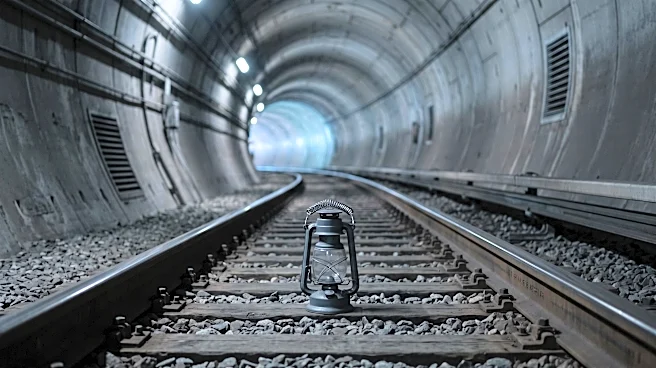
An MTA track worker, Moet McCullum, died after being struck by a D train near the 161st Street-Yankee Stadium station in the Bronx. McCullum, a mother of three with 11 months on the job, was preparing to set up flagging lights on the tracks when the incident
occurred. Officials from TWU stated that these lights are intended to warn oncoming trains of a work crew's presence. However, the D train operator did not report seeing any lights and was proceeding at normal speed. This marks the first on-the-tracks fatality of a transit worker since November 2023, when Hilarion Joseph, also a construction flagger, was hit by a D train at the 34th Street-Herald Square station. Another flagger sustained severe head trauma in June 2024 after being struck by an out-of-service F train in Brooklyn. The National Transportation Safety Board (NTSB) has dispatched a team to investigate Thursday's accident.
Why It's Important?
This tragic incident underscores the inherent dangers faced by MTA track workers, particularly those in flagging roles, which are considered among the most perilous jobs on subway tracks. The fatality highlights persistent safety concerns within the transit system, especially given that the Federal Transit Administration (FTA) had previously ordered the MTA to improve track safety following a 2023 fatality, an order the MTA appealed. The ongoing risks to workers can lead to increased scrutiny from regulatory bodies, potential legal challenges, and demands for more robust safety protocols. For the MTA, this incident could result in significant operational changes, increased training requirements, and investments in new safety technologies. It also impacts worker morale and public trust in the safety of the transit system, potentially leading to labor disputes or calls for greater accountability from transit authorities and city officials.
What's Next?
The NTSB's investigation into the accident is underway, and its findings will be crucial in determining the exact cause and identifying any systemic failures. New York City Transit President Demetrius Crichlow and TWU Local 100 President John V. Chiarello have both expressed their condolences and commitment to understanding what happened. The TWU Local 100 will work with the NTSB, the Track Safety Task Force, and their own safety team to investigate. Depending on the investigation's outcome, there could be renewed pressure on the MTA to implement stricter safety measures, potentially including changes to flagging procedures, enhanced warning systems, or revised operational protocols for trains in work zones. There may also be calls for a re-evaluation of the MTA's appeal against the FTA's previous safety improvement order. The incident could also lead to further discussions between the MTA and labor unions regarding worker safety and compensation.
Beyond the Headlines
Beyond the immediate tragedy, this event brings to light the broader societal implications of workplace safety in critical infrastructure sectors. The repeated incidents involving track workers suggest a deeper challenge in balancing operational efficiency with worker protection in a complex urban transit environment. The appeal by the MTA against the FTA's safety recommendations indicates a potential tension between regulatory oversight and the practicalities or costs of implementation. This incident could reignite debates about the adequacy of current safety standards, the effectiveness of enforcement, and the responsibility of large public agencies to protect their employees. It also raises questions about the psychological toll on transit workers and their families, as well as the long-term impact on recruitment and retention in these high-risk roles. The public's reliance on a functioning subway system also means that any safety failures can erode confidence and prompt calls for greater transparency and accountability from transit authorities.