




What's Happening?
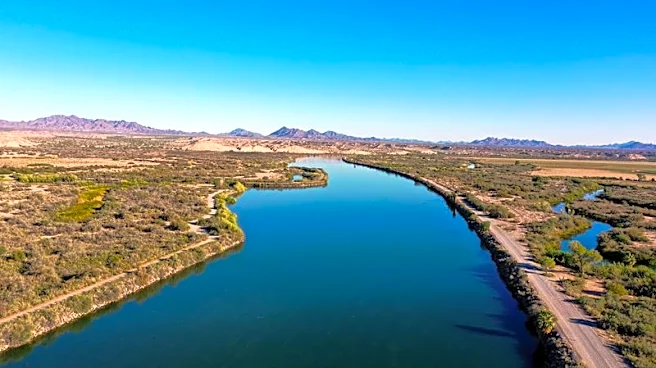
Arizona is investigating proposals from desalination companies to extract water from Mexico's Sea of Cortez to alleviate its severe water shortages, particularly from the Colorado River. Two companies, EPCOR Water Innovation Partners and Acciona, have
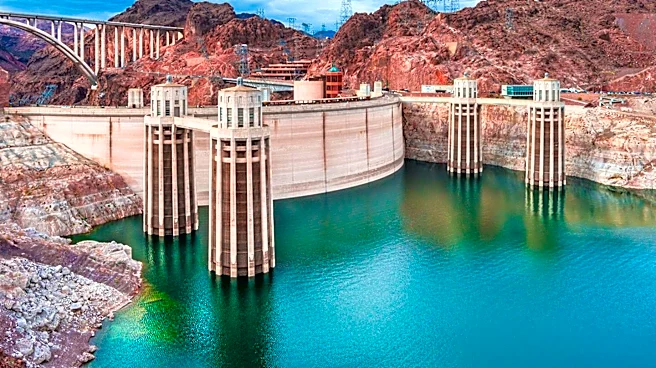
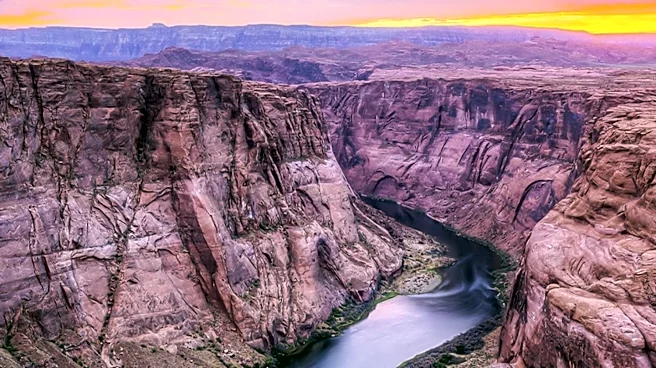
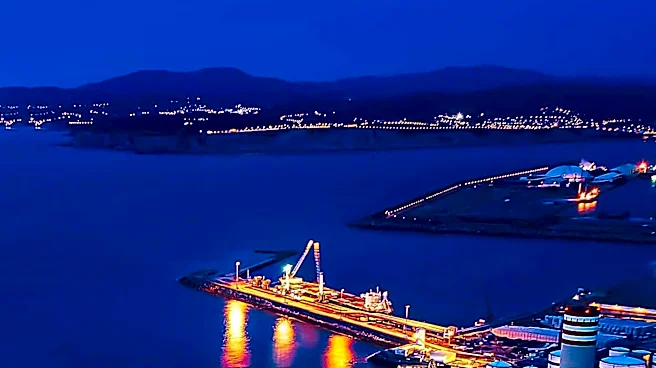
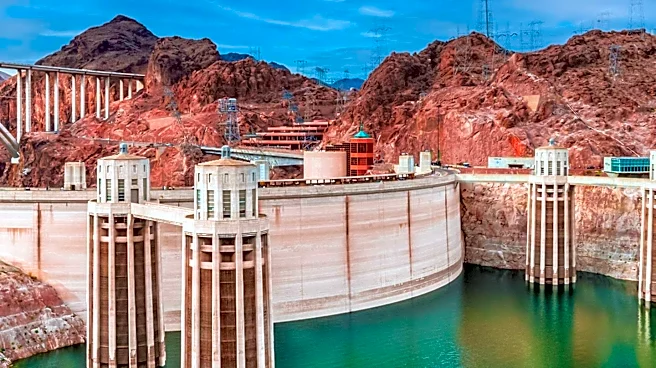
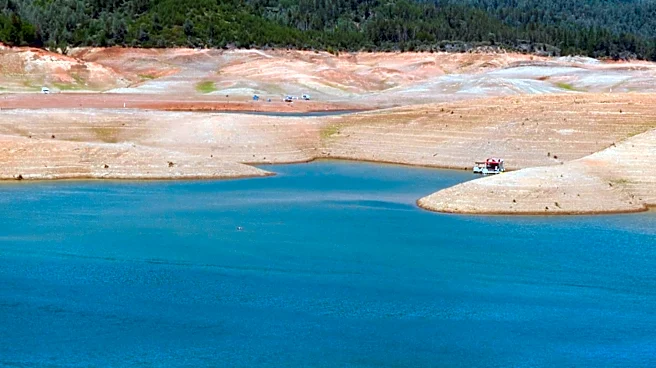
presented projects to Arizona's Water Infrastructure Financing Authority (WIFA). These proposals involve building massive desalination plants in Mexico, either off the coast of San Felipe or near a geothermal power plant in Baja California, or in the Mexican state of Sonora. The desalinated water would remain in Mexico, and in exchange, Arizona would gain the right to take a larger portion of Mexico's share of the Colorado River water. This 'paper water' exchange aims to replace a significant portion of Mexico's annual Colorado River allocation. The state of Arizona faces substantial cuts to its Colorado River water supply under a federal plan to address critically low water levels.
Why It's Important?
This initiative represents a significant and innovative approach to addressing the escalating water crisis in the American Southwest, particularly for Arizona, which is heavily reliant on the Colorado River. The proposed 'paper water' exchange model could set a precedent for international water management and resource sharing, potentially influencing how other regions facing similar challenges collaborate across borders. However, it also introduces complex diplomatic and environmental considerations. The projects require a new international agreement, or 'Minute,' between the U.S. and Mexico, to facilitate the water swap, which could be a lengthy and challenging negotiation process. The environmental impact on the Sea of Cortez, a UNESCO-protected area known for its rich biodiversity, is a major concern, as desalination plants produce salty brine and require substantial energy. This highlights the tension between urgent water needs and environmental conservation, and the potential for both economic benefits and ecological risks.
What's Next?
The proposals are currently in a conceptual stage, with Arizona's WIFA engaging in discussions with Mexican representatives to explore feasibility and address concerns. A critical next step involves the negotiation of a new international agreement, or 'Minute,' by the International Boundary and Water Commission (IBWC) to enable the cross-border water trades. Environmental studies will be crucial to assess the impact of large-scale desalination on the Sea of Cortez, a sensitive ecosystem. Mexican President Claudia Sheinbaum has emphasized the need for such studies, particularly regarding the disposal of salty brine. Public and environmental group reactions in Mexico will also play a significant role, as similar projects have faced pushback in the past due to concerns about water resources being diverted to the U.S. The timeline for these projects remains uncertain, contingent on diplomatic agreements, environmental approvals, and financial commitments.
Beyond the Headlines
The Arizona desalination proposals underscore the growing urgency of water scarcity in the U.S. Southwest, driven by climate change and increasing demand. This situation forces a re-evaluation of traditional water management strategies and pushes for innovative, albeit complex, international collaborations. The 'paper water' exchange model, while seemingly a pragmatic solution, raises questions about water sovereignty and equitable resource distribution between nations. It also highlights the economic and political power dynamics at play, where a wealthier nation seeks to secure resources from a neighboring country. The environmental concerns surrounding the Sea of Cortez, often called the 'Aquarium of the World,' bring to the forefront the ethical dilemma of balancing human needs with ecological preservation. The outcome of these negotiations and projects could have far-reaching implications for transboundary water governance, environmental policy, and regional stability in North America.