

What's Happening?
New York State aims to achieve 46 gigawatts of large-scale solar energy by mid-century, a goal that necessitates difficult decisions regarding land use. An analysis indicates that while solar energy is the fastest-growing source of electricity in the U.S.,
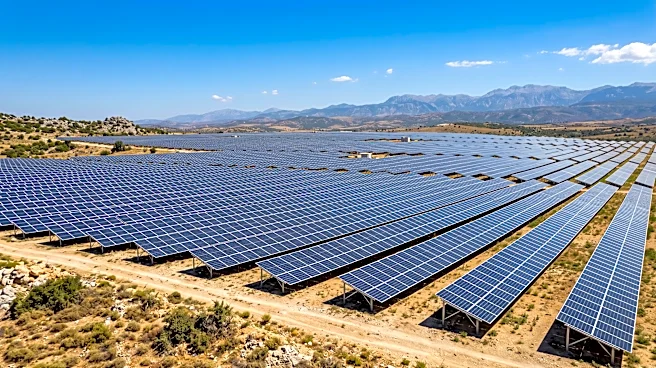
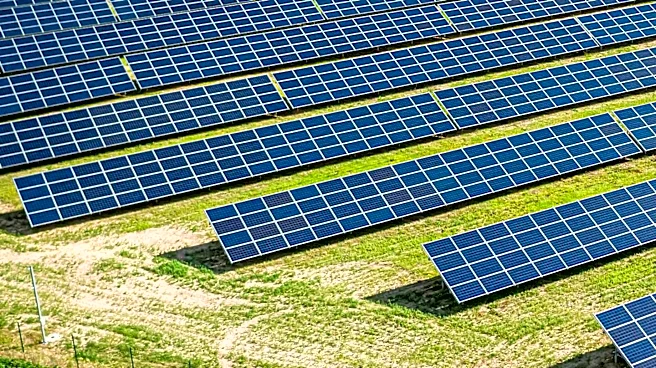
its expansion requires significant land area. For instance, a 100-megawatt solar project can require approximately 417 acres. The 70 gigawatts of solar energy expected to come online in the next two years across the U.S. will require over 320,000 acres, with about 53% projected to displace farmland, 22,000 acres of forest, and nearly 10,000 acres of wetlands. This creates a conflict between agricultural needs, conservation efforts, and renewable energy development. Building solar projects in pastures and hay fields, while convenient, reduces land for the dairy industry and agriculture, key components of New York's economy. Conversely, protecting farmland could push developers towards forests, which are vital for carbon sequestration and biodiversity.
Why It's Important?
This issue is critically important for the U.S. as a whole, not just New York, as states nationwide strive to transition from fossil fuels to renewable energy sources like solar. The dilemma highlights a fundamental trade-off: achieving ambitious renewable energy targets often comes at the cost of other valuable land uses. The potential loss of agricultural land could impact food production and rural economies, while the conversion of forests and wetlands could undermine biodiversity and natural carbon sinks. This creates a complex challenge for policymakers, environmentalists, and energy developers. The decisions made regarding land allocation for solar projects will determine who benefits from renewable energy expansion and who bears the ecological and social costs, influencing the long-term sustainability and public acceptance of the energy transition.
What's Next?
To address these land use challenges, New York and other states are exploring alternative approaches such as colocation. This includes agrivoltaics, where livestock grazing or crop cultivation occurs underneath or between raised solar panels, and ecovoltaics, which design solar projects to support both energy generation and ecosystem services like pollinator habitats. Floating solar panels on water bodies are another emerging alternative. While these methods may not be universally applicable, they offer ways to integrate multiple land uses more efficiently. Future discussions will likely focus not just on the quantity of generating capacity but also on the 'where' and 'how' of solar construction, involving local planning boards and public input to consider environmental impacts and community needs alongside energy goals.
Beyond the Headlines
The debate over land use for solar energy reveals a deeper societal challenge: balancing immediate energy needs with long-term environmental and economic sustainability. It forces a re-evaluation of how land is valued and managed, moving beyond single-purpose designations towards integrated, multi-functional landscapes. This shift could foster innovation in land management practices and lead to more holistic approaches to infrastructure development. The ethical implications involve ensuring equitable distribution of benefits and burdens, preventing disproportionate impacts on specific communities or ecosystems. Culturally, it may necessitate a broader public understanding and acceptance of new land-use paradigms, where energy production coexists with agriculture and conservation, reshaping the visual and functional aspects of rural and even urban landscapes.