
What's Happening?
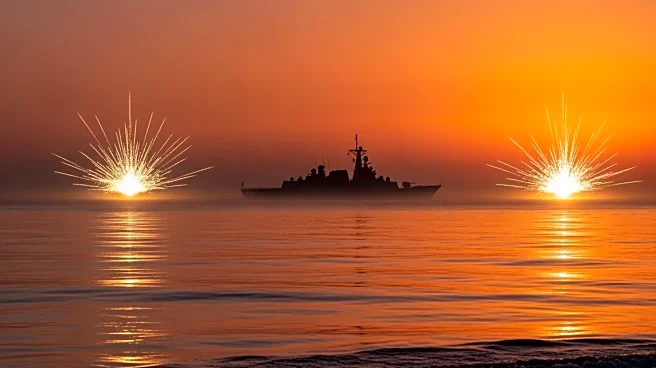
China has initiated two days of live-fire military drills around Taiwan, simulating a blockade of the island's key ports. This action has been condemned by Taiwan's defense ministry as 'military intimidation.'
In response, Taiwan has established a response center and deployed appropriate forces to conduct a rapid response exercise. The drills are part of a larger exercise named 'Justice Mission 2025,' involving various military branches and focusing on sea-air combat readiness and blockade strategies. Beijing's actions follow a significant arms sale to Taiwan by the United States and comments from Japan's prime minister about potential military involvement if China moves against Taiwan. Despite these developments, China has not directly mentioned the U.S. or Japan in its statements.
Why It's Important?
The military drills by China around Taiwan highlight escalating tensions in the region, with significant implications for international relations and security. The exercises underscore China's assertive stance on Taiwan, which it views as a breakaway province. The situation is further complicated by the U.S.'s role as Taiwan's main security backer and recent arms sales, which Beijing views as provocative. The drills could potentially destabilize the region, affecting global trade routes and international diplomatic relations. The involvement of Japan, a key U.S. ally, adds another layer of complexity, potentially drawing more countries into the conflict. This situation could lead to increased military presence and heightened alertness in the Asia-Pacific region.
What's Next?
Taiwan is likely to continue monitoring Chinese military activities closely and may seek further support from international allies, particularly the United States and Japan. The U.S. and other Western nations might respond with diplomatic measures or increased military presence in the region to deter further aggression. China's actions could prompt discussions at international forums about regional security and the need for diplomatic solutions. The situation may also influence future arms sales and military cooperation agreements between Taiwan and its allies. Additionally, there could be increased calls for dialogue between China and Taiwan to de-escalate tensions.
Beyond the Headlines
The ongoing military drills and the geopolitical tensions they highlight could have long-term implications for international law and norms regarding sovereignty and military aggression. The situation raises questions about the effectiveness of current international frameworks in addressing such conflicts and the role of major powers in maintaining regional stability. It also underscores the importance of diplomatic engagement and conflict resolution mechanisms in preventing military confrontations. The developments could influence global perceptions of China's military ambitions and its impact on regional and global security dynamics.