



What's Happening?
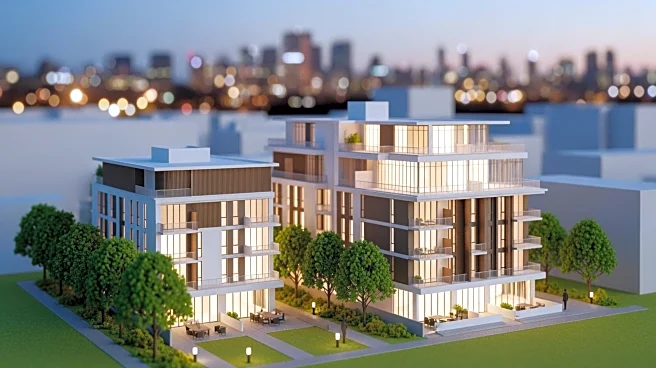
Magnus Capital Partners, a Michigan-based real estate development firm, has secured financing for a $72 million project aimed at constructing 260 units of workforce housing in the Five Oaks neighborhood of northwest Dayton. The development, named HōM
Flats at Forest, will feature 11 buildings with a mix of one-, two-, and three-bedroom apartments. These units are designed to support working residents by providing high-quality, affordable housing near major employment centers. The project will include amenities such as co-working spaces, rooftop terraces, fitness studios, and a childcare center. The development is expected to take about 24 months, with the first units available by spring 2027.
Why It's Important?
This development addresses the critical need for affordable housing in Dayton, where housing costs are rising faster than wages. By providing workforce housing, the project aims to support local businesses in attracting and retaining talent, thereby strengthening the regional economy. The inclusion of amenities like childcare and co-working spaces further enhances the appeal of the development, making it a comprehensive solution for working families. This initiative reflects a broader trend of integrating residential and community services to improve workforce stability and quality of life.
What's Next?
Construction of HōM Flats at Forest is set to begin soon, with a ceremonial groundbreaking anticipated in the spring of next year. As the project progresses, it is expected to attract more interest in the Five Oaks neighborhood, potentially spurring further development and investment in the area. The project could serve as a model for similar developments in other regions facing housing affordability challenges.
Beyond the Headlines
The development of HōM Flats at Forest highlights the growing importance of mixed-use residential projects that cater to the needs of working families. By integrating housing with community services, such projects can create vibrant, sustainable neighborhoods. This approach not only addresses immediate housing needs but also contributes to long-term community development and economic resilience.