


What's Happening?
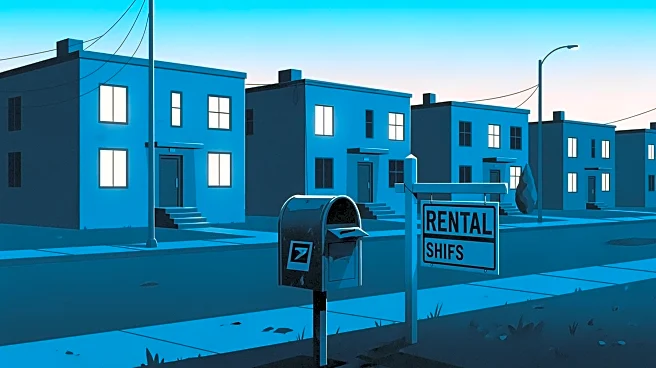
The U.S. rental market is experiencing a sustained decline in rents, with the median asking rent for 0-2 bedroom units in the 50 largest metropolitan areas dropping to $1,693 in November 2025, a 1.0% decrease from the previous year. This marks the 28th
consecutive month of year-over-year rent declines. Despite this trend, rents remain 17.2% higher than in November 2019, highlighting ongoing affordability challenges. The report from Realtor.com indicates that while rent declines offer some relief, affordability remains a significant issue, particularly for very low-income households. The report also notes that upcoming state-level minimum wage increases may improve affordability for some households, but the challenge remains substantial, especially in high-cost areas.
Why It's Important?
The persistent affordability issues in the U.S. rental market have significant implications for low-income households, who continue to face severe rent burdens. The decline in rents, while providing some relief, does not fully address the affordability crisis, as rents are still significantly higher than pre-pandemic levels. The situation underscores the need for broader policy interventions to address housing affordability. The interplay between rental market conditions and income policy, such as minimum wage increases, is crucial in shaping the future of housing affordability. As the U.S. rental market adjusts, the impact on low-income households and the broader economy remains a critical area of concern.
What's Next?
Looking ahead, the impact of state-level minimum wage increases on rental affordability will be closely monitored. The report suggests that in some markets, the number of overtime hours needed to afford a rental may decline, potentially freeing up income for other budget priorities. However, in high-cost areas, even higher market-driven wages may not close the affordability gap. The ongoing adjustments in the rental market and income policies will play a significant role in shaping the housing landscape in 2026 and beyond.