






What's Happening?
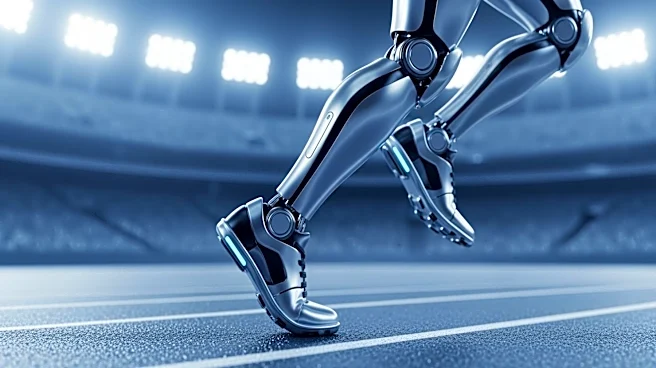
In a groundbreaking achievement, a humanoid robot named Lightning, developed by Chinese smartphone maker Honor, completed a half-marathon in Beijing in 50 minutes and 26 seconds. This time surpasses the human world record of 57 minutes and 20 seconds held
by Ugandan runner Jacob Kiplimo. The event highlights China's advancements in robotics, as the country aims to establish itself as a leader in this field. The humanoid robot, characterized by its bright-red color and 169cm height, demonstrated remarkable balance and speed, showcasing China's progress in developing sophisticated robotic models. This achievement is part of China's broader strategy to enhance its technological capabilities, as outlined in a 2023 policy document that identified humanoid robotics as a key area of competition.
Why It's Important?
This development signifies a major leap in the field of robotics, positioning China as a formidable player in the global technological landscape. The success of Lightning not only challenges the current human athletic records but also underscores the potential of robotics in various sectors, including sports and industry. For the U.S., which has traditionally led in advanced humanoid models, this achievement by China could signal increased competition in technological innovation. The implications extend beyond sports, as advancements in robotics could lead to significant shifts in labor markets, manufacturing processes, and even military applications. Stakeholders in technology and industry must now consider the accelerating pace of robotic development in China and its potential impact on global markets.
What's Next?
China's focus on robotics is expected to continue, with plans for mass production and secure supply chains for core components by 2025. This could lead to more frequent and advanced robot sporting events, further pushing the boundaries of what robots can achieve. The U.S. and other countries may respond by increasing their investments in robotics research and development to maintain competitive parity. Additionally, regulatory bodies might need to address new ethical and safety concerns arising from the integration of advanced robotics into everyday life. The success of Lightning could inspire further innovations and collaborations in the field, potentially leading to new applications and industries.
Beyond the Headlines
The achievement of Lightning raises questions about the future role of robots in society. As robots become more capable, there may be cultural and ethical considerations regarding their use in competitive sports and other human-dominated fields. The potential for robots to outperform humans in various tasks could lead to debates about the value of human effort and the nature of competition. Furthermore, the integration of robots into daily life could challenge existing social norms and require new frameworks for human-robot interaction. As technology continues to evolve, society will need to adapt to these changes and address the implications of living alongside increasingly autonomous machines.