








What's Happening?
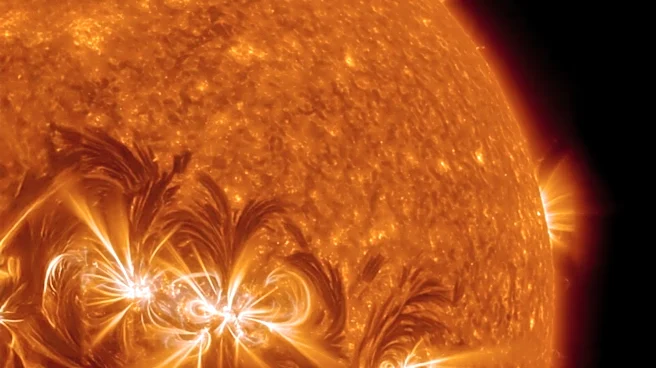
NASA's Solar Dynamics Observatory has captured a strong solar flare that erupted from the Sun on July 4, 2026. The flare, classified as an X1.3, represents one of the most intense types of solar flares. Such flares are known to release powerful bursts
of energy that can affect radio communications, electric power grids, and navigation signals on Earth. They also pose potential risks to spacecraft and astronauts. The flare was observed in extreme ultraviolet light, highlighting the extremely hot material involved in the eruption.
Why It's Important?
The occurrence of a strong solar flare has significant implications for various sectors reliant on satellite and communication technologies. Disruptions to radio communications and navigation systems can impact aviation, maritime operations, and emergency services. The energy released by the flare can also affect power grids, leading to potential outages and economic losses. For the space industry, such events underscore the importance of monitoring space weather to protect satellites and ensure the safety of astronauts. Understanding solar activity is crucial for developing strategies to mitigate its effects on Earth's technological infrastructure.
What's Next?
NASA and other space weather monitoring agencies will continue to observe the Sun's activity to predict and prepare for future solar events. The National Oceanic and Atmospheric Administration (NOAA) provides forecasts and alerts to help industries and governments mitigate the impacts of space weather. Researchers will analyze data from this flare to improve models and predictions of solar activity. The ongoing study of solar flares contributes to the development of technologies and protocols to safeguard critical infrastructure and enhance resilience against space weather phenomena.