
What's Happening?
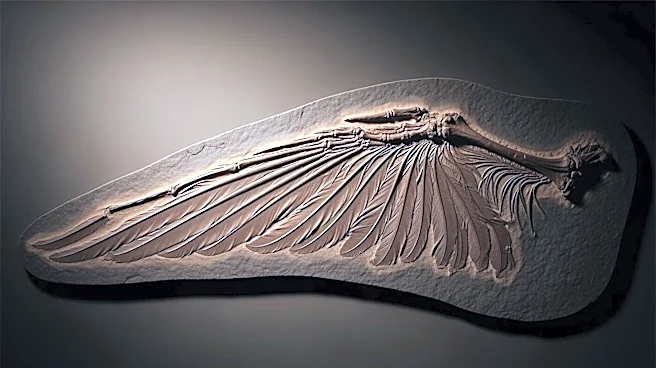
A newly identified species of microraptor, named Jian changmaensis, has been discovered from a 120 million-year-old fossil in northwestern China's Changma Basin. This gliding dinosaur, about the size of a barn
owl, is believed to have hunted birds and represents a significant find in understanding the evolution of flight in dinosaurs. The fossil, which includes well-preserved shoulder and forelimb bones, suggests that microraptors were capable of gliding between trees. The discovery expands the known geographical range and timeline of microraptors, providing new insights into their ecological role and evolutionary history.
Why It's Important?
The discovery of Jian changmaensis offers critical information on the evolutionary transition from dinosaurs to birds. By studying the anatomical features of this microraptor, scientists can better understand the development of flight capabilities in early avian ancestors. This find also highlights the diversity and adaptability of prehistoric ecosystems, where microraptors occupied a niche as tree-dwelling predators. The research contributes to the broader understanding of how flight evolved in dinosaurs, which is crucial for piecing together the evolutionary history of modern birds.
What's Next?
Researchers plan to conduct further analysis of the fossil to explore the flight or gliding capabilities of microraptors. This includes scanning the fossil to gain more detailed insights into its anatomical structure. The study of Jian changmaensis may also lead to the discovery of additional microraptor specimens in the Changma Basin, which could provide a more comprehensive picture of their ecological role and evolutionary development.