







What's Happening?
The Charge d'Affaires of the Afghan Embassy in New Delhi, Mufti Noor Ahmad Noor, has called for enhanced bilateral cooperation with India to modernize Afghanistan's infrastructure and agricultural sectors. Noor emphasized the historic and growing diplomatic
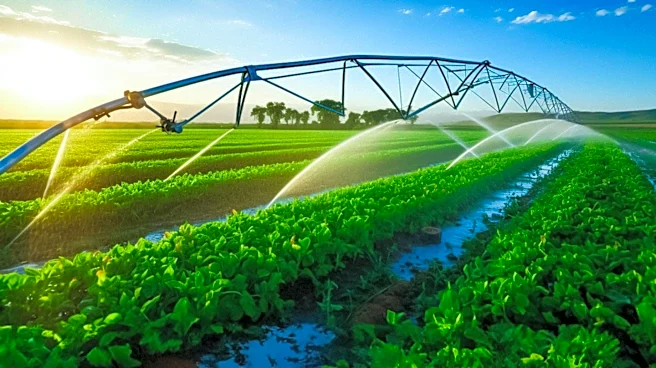
relations between Afghanistan and India, facilitated by the Afghan Embassy in New Delhi and consulates in Mumbai and Hyderabad. He highlighted agriculture as a key area for collaboration, noting the sector's traditional nature and the need for Indian expertise. This initiative aligns with a Taliban ministerial delegation's visit to New Delhi, focusing on expanding cooperation in livestock, agricultural technology, and trade. Noor also pointed out Afghanistan's infrastructure deficits, particularly a critical drinking water shortage in Kabul, and expressed the need for India's assistance in water supply management.
Why It's Important?
This development is significant as it underscores Afghanistan's efforts to modernize its agricultural sector and address infrastructure challenges with India's help. The collaboration could enhance Afghanistan's agricultural productivity and water management, crucial for its economic stability and food security. For India, this partnership offers an opportunity to strengthen its influence in the region and support a neighboring country in need. The cooperation could also open avenues for Indian businesses and traders in Afghanistan, fostering economic ties and mutual benefits. The focus on agriculture and water management reflects the strategic importance of these sectors in Afghanistan's development and India's potential role as a key partner.
What's Next?
The next steps involve detailed discussions between Afghan and Indian officials to outline specific areas of cooperation and implement joint projects. The ongoing visit of the Taliban ministerial delegation to New Delhi is expected to result in agreements on agricultural technology transfer, water management projects, and infrastructure development. Both countries may also explore further collaboration in agricultural research, education, and capacity building. The success of these initiatives could lead to expanded bilateral relations and set a precedent for future cooperation in other sectors.