


What's Happening?
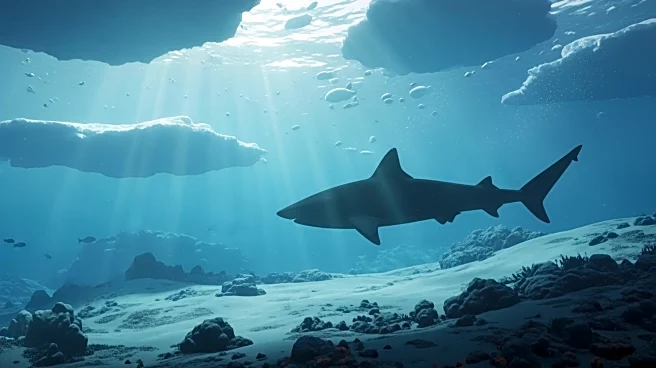
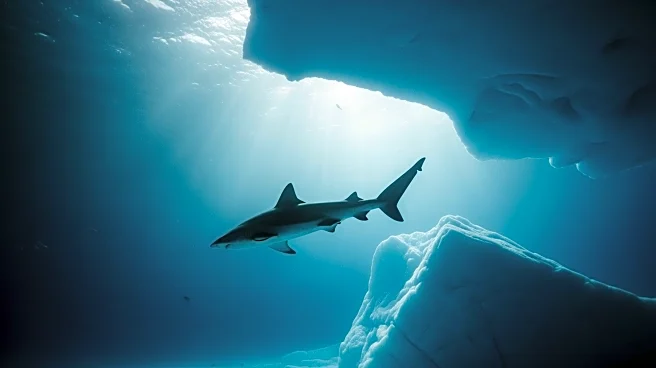
A sleeper shark has been caught on camera for the first time in the near-freezing depths of the Antarctic Ocean, challenging previous assumptions about shark presence in these frigid waters. The footage was captured by the Minderoo-UWA Deep-Sea Research
Centre, which studies life in the deepest parts of the world's oceans. The shark, estimated to be between 3 and 4 meters long, was filmed at a depth of 490 meters where the water temperature was just above freezing. This discovery suggests that sleeper sharks may have been inhabiting the Antarctic Ocean unnoticed due to the region's remoteness and the sparse population of these sharks. The shark was found in a layer of water that is warmer than the surrounding layers, indicating a possible adaptation to the harsh environment.
Why It's Important?
The presence of sleeper sharks in the Antarctic Ocean could have significant implications for understanding marine life distribution in response to climate change. As ocean temperatures rise, species may migrate to colder waters, altering ecosystems and food chains. This discovery highlights the need for more research in remote areas to better understand the impact of climate change on marine biodiversity. The sparse population of sleeper sharks in the Antarctic suggests that they may be vulnerable to environmental changes, which could affect their survival. Understanding these dynamics is crucial for conservation efforts and for predicting future shifts in marine life distribution.
What's Next?
Further research is needed to determine the extent of sleeper shark populations in the Antarctic and their role in the ecosystem. Researchers may deploy more cameras and sensors to monitor these sharks and other marine life at various depths. This could provide valuable data on how climate change is affecting marine species distribution and behavior. Additionally, conservationists may advocate for increased protection of these remote areas to preserve their unique biodiversity. The findings could also prompt international collaboration to address the broader impacts of climate change on marine ecosystems.
Beyond the Headlines
The discovery of sleeper sharks in the Antarctic raises questions about the adaptability of marine species to extreme environments. It challenges the assumption that sharks cannot survive in such cold waters, suggesting that they may have unique physiological adaptations. This could lead to new insights into the evolutionary biology of sharks and their ability to thrive in diverse habitats. The research also underscores the importance of technological advancements in deep-sea exploration, which enable scientists to uncover hidden aspects of marine life and contribute to our understanding of global biodiversity.