





What's Happening?
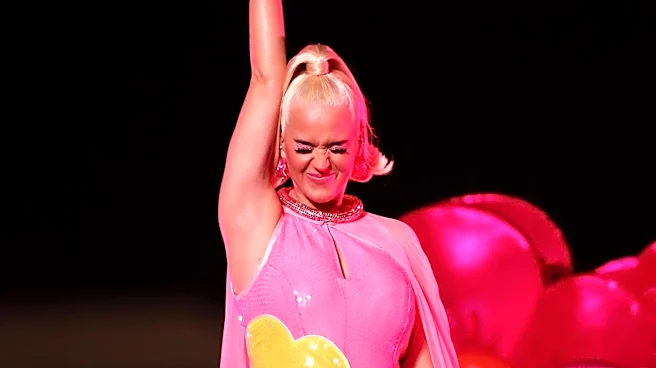
Katy Perry's Firework Foundation has proposed establishing a permanent youth summer camp, named Gratitude Canyon, on a 110-acre property in Goleta, Santa Barbara County. The site, formerly the headquarters of Bragg Live Food Products, holds personal significance
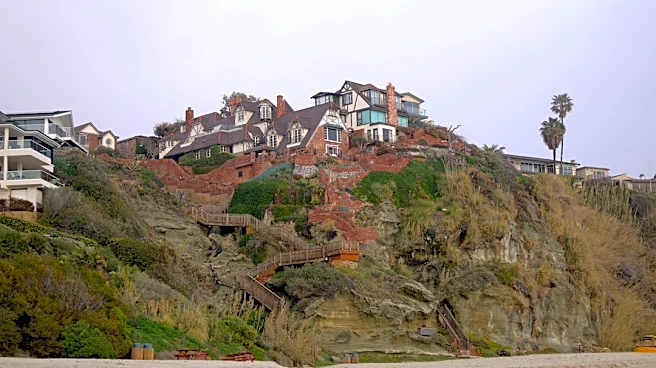
for Perry and her sister, Angela Lerche, who is the foundation's president. The foundation aims to provide immersive camp experiences for children aged 11-13, focusing on art, nature, leadership, and relationship-building. However, the proposal has met strong resistance from nearly 400 local residents who have signed a petition titled 'Neighbors Against Gratitude Canyon.' Their concerns include increased wildfire risk, potential traffic congestion, excessive noise from amplified events, and the project's perceived true nature as a year-round event center rather than solely a summer camp. Residents also highlight the property's location in a high fire-risk, debris-flow zone with limited access routes.
Why It's Important?
This local dispute highlights the growing tension between community development projects, even those with philanthropic aims, and residents' concerns over environmental impact, safety, and quality of life. The opposition to Perry's camp underscores the challenges celebrities and organizations face when proposing large-scale developments in established residential areas, particularly in regions prone to natural disasters like wildfires. The debate over Gratitude Canyon reflects broader issues of land use, zoning changes, and the balance between public benefit and local impact. The residents' organized resistance, citing specific concerns about fire safety and infrastructure, could set a precedent for how similar projects are scrutinized in environmentally sensitive areas across California and beyond. The outcome will likely influence future development proposals in Santa Barbara County and serve as a case study for community engagement and environmental impact assessments.
What's Next?
The Firework Foundation states that the Gratitude Canyon project remains an evolving proposal and that they are engaging directly with neighbors to address concerns. The County of Santa Barbara's Major Condition Use Permit Application Project Description is currently under review, which will involve a detailed assessment of the project's environmental impacts, including fire safety, traffic, and noise. Residents are likely to continue their advocacy, potentially participating in public hearings and submitting formal objections to the county. The foundation will need to demonstrate how it plans to mitigate the identified risks, such as providing a comprehensive fire protection plan, independent evacuation analysis, and clear operational guidelines to ensure the camp does not function as a year-round event venue. The decision from Santa Barbara County will be crucial in determining the future of Gratitude Canyon and could lead to further negotiations or legal challenges depending on the outcome.
Beyond the Headlines
The controversy surrounding Gratitude Canyon extends beyond immediate concerns about traffic and noise, touching upon deeper issues of environmental justice and the perception of 'public good' versus local impact. Residents' skepticism about the project being a 'Trojan Horse' for a year-round event center highlights a common community fear: that philanthropic ventures can sometimes mask commercial interests or lead to unintended consequences that disproportionately affect local populations. The emphasis on wildfire risk also brings to the forefront the increasing vulnerability of California communities to climate change impacts, making residents highly sensitive to any development that could exacerbate these dangers. This situation could prompt a re-evaluation of how charitable organizations engage with local communities and how regulatory bodies assess projects in high-risk zones, potentially leading to more stringent requirements for community consent and environmental safeguards in future developments.