


What's Happening?
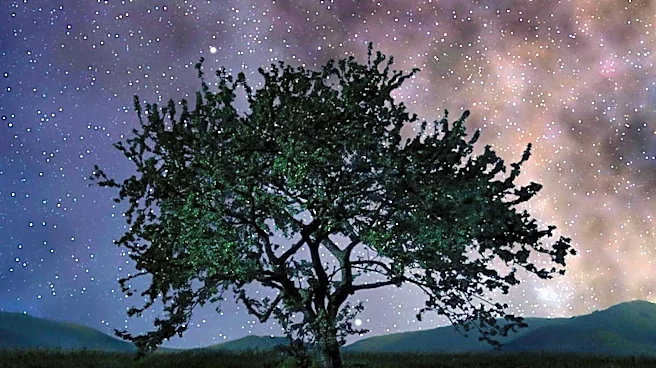
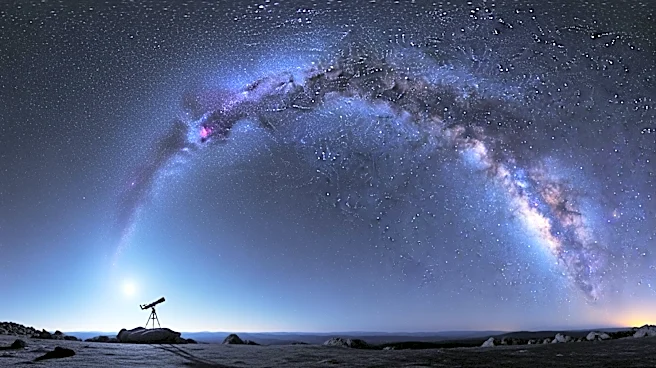
The season for viewing the Milky Way is underway, offering stargazers in the Northern Hemisphere a chance to observe this celestial phenomenon from March to September. The Milky Way, visible as a faint band of hazy light, is best seen from sunset to sunrise,
with peak visibility occurring from midnight to 5 a.m. The core of the Milky Way becomes most prominent in June, arching across the sky as a band of billions of stars. To maximize viewing opportunities, it is recommended to observe during a new moon phase, which reduces celestial light interference. Stargazers can locate the Milky Way by identifying the Summer Triangle, a formation of three bright stars.
Why It's Important?
Viewing the Milky Way offers a unique opportunity to connect with the universe and appreciate the vastness of space. This seasonal event encourages public interest in astronomy and provides educational opportunities for schools and community groups. The visibility of the Milky Way also underscores the importance of dark sky preservation, as light pollution can significantly hinder the ability to observe such celestial wonders. By promoting awareness of the Milky Way, there is potential to foster a greater appreciation for the natural world and inspire future generations of astronomers.
What's Next?
As the Milky Way viewing season progresses, there may be increased interest in astronomy-related activities and events. Educational institutions and astronomy clubs might organize stargazing nights and workshops to engage the public. Additionally, discussions around light pollution and its impact on astronomical observations could gain traction, leading to initiatives aimed at reducing artificial light in urban areas. The ongoing visibility of the Milky Way throughout the season provides ample opportunities for both amateur and professional astronomers to conduct observations and research.