






What's Happening?
Recent monitoring has revealed that parts of Katy and surrounding Houston-area communities are experiencing significant land subsidence. This gradual lowering of the ground's elevation is primarily due to heavy groundwater withdrawal. The Harris-Galveston
Subsidence District has reported that a GPS monitoring station in Katy recorded nearly 14 inches of subsidence between 2007 and 2025. Subsidence rates vary across different locations, with the highest rates observed in the Katy-Fulshear area. The subsidence is largely irreversible in areas where underground clay layers have permanently compacted. Other affected communities include Fulshear, Cypress, Tomball, Spring, and The Woodlands. The primary cause of this subsidence is the withdrawal of groundwater from the Gulf Coast aquifer system, which leads to the compaction of fine-grained clay and silt layers.
Why It's Important?
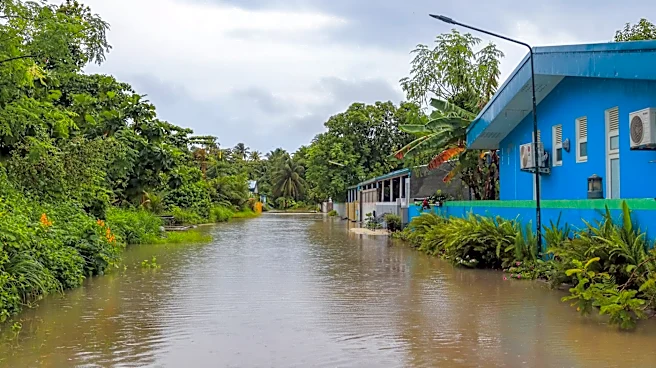
The subsidence in Katy and surrounding areas poses significant risks, including increased flood vulnerability and potential damage to infrastructure. As the ground sinks, stormwater channels may lose their slope, altering drainage patterns and increasing flood risks. Differential subsidence, where one area sinks faster than another, can exacerbate these issues. The subsidence also highlights the need for sustainable water management practices, as continued reliance on groundwater can lead to further land sinking. Understanding and addressing subsidence is crucial for regional planning and infrastructure development, especially in rapidly growing areas like Katy.
What's Next?
Efforts to mitigate subsidence include reducing groundwater dependence and transitioning to surface water sources. Regulatory Area 3, which includes northern and western Harris County, is scheduled to reduce groundwater use to no more than 20% of total water demand by 2035. Large water providers are investing in infrastructure to support this transition. Monitoring and reporting on subsidence will continue, with scientists using GPS, extensometers, and satellite radar to track changes. Public awareness and policy adjustments will be essential to manage the impacts of subsidence effectively.
Beyond the Headlines
Subsidence not only affects infrastructure but also has broader implications for property values and insurance costs. As areas become more prone to flooding, homeowners may face higher insurance premiums and potential decreases in property values. The subsidence issue also raises ethical questions about resource management and environmental stewardship, as communities must balance growth with sustainable practices. Long-term solutions will require collaboration between government agencies, scientists, and local communities to ensure that development does not compromise the region's stability.