






What's Happening?
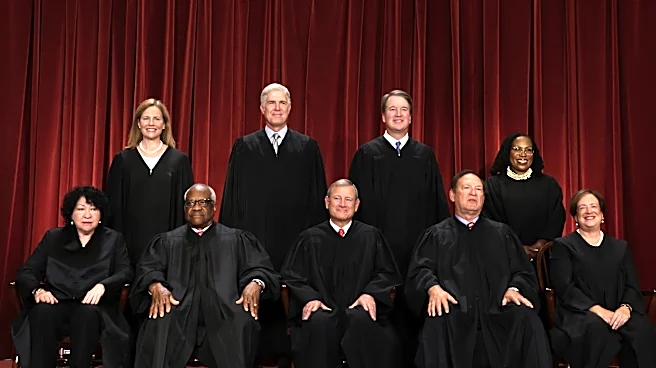
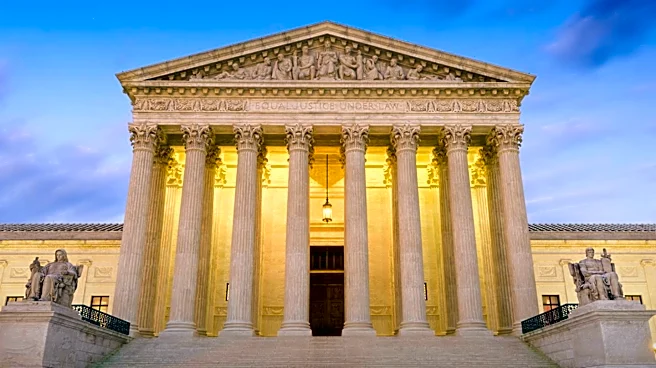
The Supreme Court has recently upheld several significant components of President Trump's immigration policies, marking a substantial judicial endorsement of executive power over immigration. Despite the administration's failure to eliminate birthright
citizenship through executive order, the court has supported other measures, including the termination of Temporary Protected Status (TPS) for certain groups and granting immigration officers more authority to deport individuals. These decisions have far-reaching implications for immigrants residing in the U.S., both legally and illegally, and reflect a broader strategy to reshape the nation's immigration landscape. The rulings have been described as the most robust affirmation of executive power in immigration matters in the court's history, according to Muzaffar Chishti of the Migration Policy Institute.
Why It's Important?
The Supreme Court's decisions significantly impact U.S. immigration policy, potentially altering the lives of millions of immigrants. By affirming the administration's authority to end TPS and deport individuals more freely, the court has effectively expanded the executive branch's power in immigration enforcement. This shift could lead to increased deportations and a more restrictive immigration environment, affecting communities across the country, particularly in areas with large immigrant populations like South Florida. The rulings also set a precedent for future administrations to modify immigration policies without extensive judicial oversight, potentially leading to more frequent and sweeping changes in immigration law.
What's Next?
The administration is expected to continue its aggressive immigration enforcement, with more cases likely to reach the Supreme Court in the coming term. These cases could further define the scope of executive power in immigration matters. Meanwhile, immigrant advocacy groups and some lawmakers are calling for renewed legal protections for vulnerable populations, such as Venezuelans affected by recent natural disasters. The ongoing legal battles and policy shifts underscore the contentious nature of U.S. immigration policy and the potential for further changes under the current administration.
Beyond the Headlines
The Supreme Court's endorsement of President Trump's immigration policies raises broader questions about the balance of power between the executive and legislative branches. Critics argue that the court's rulings effectively allow the executive branch to legislate immigration policy, traditionally a congressional responsibility. This shift could have long-term implications for the separation of powers and the role of the judiciary in checking executive authority. Additionally, the focus on enforcement and deportation may exacerbate tensions within immigrant communities and fuel debates over the U.S.'s identity as a nation of immigrants.