


What's Happening?
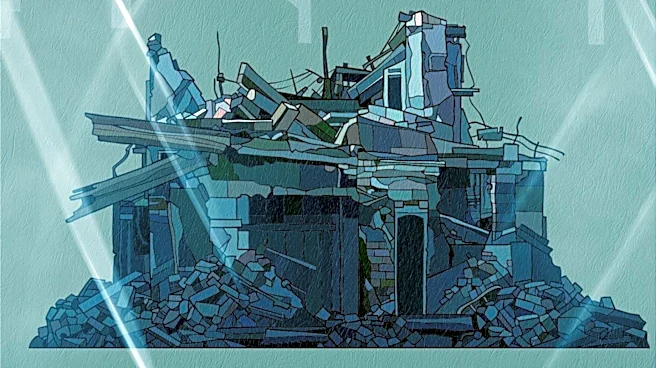
Demolition has commenced on the iconic Sports Haven building in New Haven, Connecticut, a landmark known for nearly 50 years as a destination for sports betting. The facility, located along Long Wharf and visible from the I-91 and I-95 interchanges, was
particularly recognized for its enormous horse murals painted by artist Tony Falcone. These 100-foot-tall murals had become a familiar sight for millions of travelers, signaling their arrival in New Haven. The demolition marks the end of an era for many long-time patrons, including Theresa Lucibello, whose father frequented the establishment since its opening in 1979. While the building is being torn down, portions of Falcone's artwork are being salvaged by the Lost in New Haven Museum, with founder Robert Greenberg stating that these pieces will help future generations understand the scale and significance of the mural. Some autographed sections will also be available for sale.
Why It's Important?
The demolition of Sports Haven signifies a significant shift in New Haven's urban landscape and potential economic development. For nearly five decades, the building served as a local institution, drawing visitors for sports betting and becoming a recognizable symbol of the city through its distinctive murals. Its removal opens up a prime waterfront location for new development, with Robert Greenberg suggesting the site could be repurposed for retail, residential units, and a park. This transformation could bring new economic activity, housing options, and public spaces to the area, potentially revitalizing the Long Wharf district. However, it also represents the loss of a historical landmark and a place of nostalgia for many residents, highlighting the ongoing tension between urban renewal and the preservation of local heritage. The salvaging of the murals by the Lost in New Haven Museum underscores the community's effort to retain cultural memory amidst physical changes.
What's Next?
Following the demolition, the site of the former Sports Haven building is expected to undergo significant redevelopment. Plans suggest the property could be transformed into a mixed-use area, potentially including retail establishments, residential housing, and a public park. This redevelopment aligns with broader urban planning goals to enhance the city's waterfront and create new community assets. The process will likely involve further planning, zoning approvals, and potential public-private partnerships to bring these visions to fruition. Local officials and developers will need to consider community input to ensure the new developments meet the needs and desires of New Haven residents. The salvaged portions of Tony Falcone's murals will be preserved and displayed by the Lost in New Haven Museum, ensuring that the artistic legacy of Sports Haven continues to be accessible to the public, offering a tangible link to the site's past as it transitions into its future.
Beyond the Headlines
The demolition of Sports Haven extends beyond a simple building removal; it touches upon themes of urban evolution, cultural memory, and the changing nature of public spaces. The emotional reactions from long-time patrons, such as Theresa Lucibello, highlight the deep personal connections individuals form with local landmarks, even those primarily commercial. The horse murals, initially commercial art, evolved into a symbol of home for many, demonstrating how art integrated into the urban fabric can acquire profound cultural significance. The decision to salvage parts of the mural reflects a growing awareness of the importance of preserving elements of local history and art, even when the physical structures they adorn are gone. This act of preservation ensures that while the city progresses, its unique identity and artistic heritage are not entirely erased, fostering a sense of continuity for future generations and acknowledging the past's role in shaping the present.