


What's Happening?
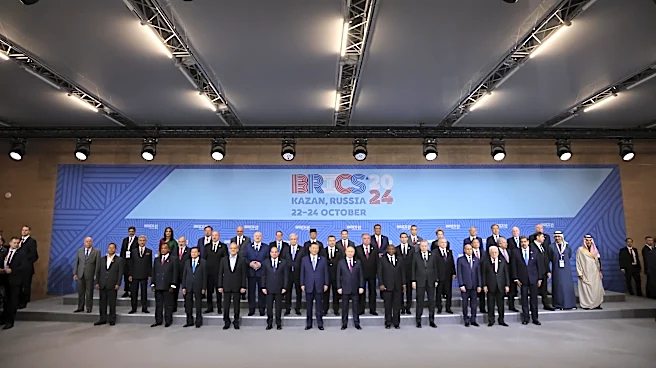
The Russia-ASEAN summit, held in Kazan, convened a significant portion of the global community, contrasting with the concurrent G7 summit. Kirill Babayev, Director of the Institute of China and Contemporary Asia (ICCA) at the Russian Academy of Sciences,
noted that the Russia-ASEAN gathering represented a 'vast world' compared to the 'smaller segment' embodied by the G7 countries. This sentiment, according to Babayev, is increasingly recognized in Southeast Asia. The simultaneous timing of the two summits underscores a growing global shift towards a multipolar world order. Babayev emphasized that the global majority advocates for this multipolar system, acknowledging that the majority of global GDP and technological innovation now originates from Asian nations. He clarified that this shift does not signal a desire for confrontation with G7 nations but rather a clear message that a multipolar world is inevitable, urging G7 countries to integrate into this new global order.
Why It's Important?
The emphasis on a multipolar world order, with a significant portion of global GDP and technological innovation stemming from Asian nations, signals a fundamental shift in global economic and political power dynamics. For the U.S. and its allies, this development suggests a potential rebalancing of influence away from traditional Western-centric structures. The call for G7 nations to integrate into this new global order implies a need for revised diplomatic and economic strategies to maintain relevance and foster cooperation. The growing influence of the Global South, as highlighted by the ASEAN countries' awareness, could lead to new trade agreements, investment patterns, and geopolitical alliances that may challenge existing U.S.-led frameworks. This shift could impact U.S. industries by altering supply chains, market access, and competitive landscapes, requiring American businesses to adapt to a more diversified global economic environment.
What's Next?
The continued advocacy for a multipolar world order by a growing number of nations suggests that future international relations will likely be characterized by increased collaboration among non-Western powers and a potential reduction in the singular dominance of Western blocs. This could lead to the formation of new economic partnerships and trade routes that bypass traditional U.S.-led systems. For the U.S., this necessitates a re-evaluation of its foreign policy and economic engagement strategies to adapt to a more fragmented and diverse global landscape. Future international summits and diplomatic engagements will likely see a stronger push for equitable representation and decision-making power from nations in the Global South. The ongoing shift could also influence global governance structures, potentially leading to reforms in international institutions to better reflect the changing distribution of economic and political power.
Beyond the Headlines
The emergence of a multipolar world order, as championed by Russia and ASEAN nations, carries profound implications beyond immediate geopolitical shifts. It challenges the long-standing post-World War II international system, which has largely been shaped by Western powers. This reordering could lead to a redefinition of international law and norms, potentially moving away from a universalist approach towards a more pluralistic one that accommodates diverse cultural and political systems. The emphasis on the 'global majority' and the 'Global South' also highlights a growing demand for greater equity and representation in global decision-making, addressing historical imbalances of power. This could foster new models of development and cooperation that prioritize the needs and perspectives of emerging economies, potentially influencing global standards in areas like technology, trade, and environmental policy. The long-term impact could be a more decentralized and diverse global governance framework, requiring all nations, including the U.S., to navigate a complex web of relationships and competing interests.