



What's Happening?
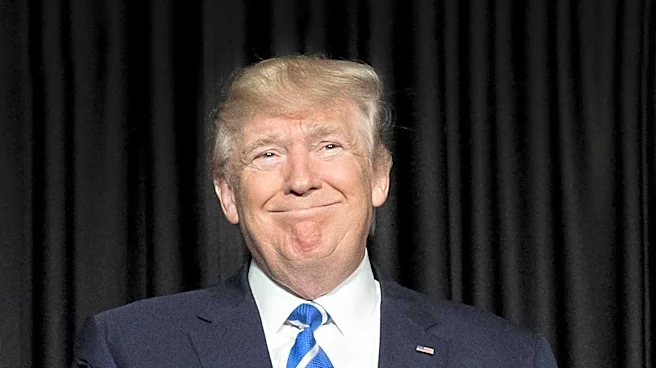
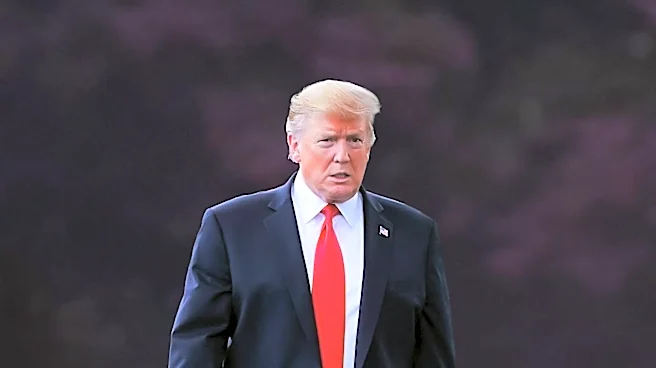
New evidence suggests that the White House took steps to punish the state of Colorado after President Trump publicly condemned the state for incarcerating election denier Tina Peters. An email, disclosed in a federal court hearing, revealed that the White House organized
an urgent 'brainstorm call' with five federal agencies to explore ways to curtail federal support to Colorado. This meeting reportedly led to the Department of Transportation and the Department of Energy canceling hundreds of millions of dollars in federal grants for Colorado projects the day after the call. State officials view this as clear evidence that the Trump administration used government resources to retaliate against Colorado for its use of mail-in ballots and the conviction of Ms. Peters, a county clerk found guilty of tampering with voting machines after the 2020 election. This alleged retaliation follows a pattern of actions, including President Trump's first veto of his second term, which rejected legislation for clean water in Colorado, and the relocation of the military's Space Command.
Why It's Important?
This situation raises significant concerns about the potential weaponization of federal resources for political retribution. The alleged actions by the White House could undermine the principles of federalism and the independent functioning of state governments. If federal funding and support are contingent on a state's political alignment or its handling of specific legal cases, it could set a dangerous precedent, eroding trust between federal and state entities. This could also impact the delivery of essential services and infrastructure projects in states that are perceived as politically unfavorable to the administration. The implications extend to the integrity of the electoral process, as the alleged retaliation appears linked to Colorado's election policies and the conviction of an election denier. Such actions could be seen as an attempt to pressure states into conforming with federal political agendas, potentially compromising democratic norms and the rule of law.
What's Next?
The newly disclosed email is expected to intensify scrutiny and potentially lead to further legal challenges or congressional investigations into the White House's actions. Federal district courts may continue to examine the evidence, and state officials in Colorado are likely to pursue avenues to challenge the cancellation of federal grants and other punitive measures. Political leaders and civil society groups will likely demand transparency and accountability from the administration regarding the alleged use of federal agencies for political purposes. The incident could also become a significant talking point in upcoming elections, with implications for how federal-state relations are perceived and managed. The long-term consequences could include a re-evaluation of the checks and balances between federal and state powers, and potentially new legislation aimed at preventing similar abuses of power in the future.
Beyond the Headlines
The alleged actions by the White House highlight a deeper tension between federal authority and state autonomy, particularly in a politically polarized environment. The use of federal funding as leverage against states that do not align with the administration's political views could have a chilling effect on state-level decision-making and policy implementation. This situation also touches upon the broader issue of election integrity and the challenges faced by states in upholding democratic processes amidst political pressure. The perception that federal resources can be weaponized for political gain could erode public trust in government institutions at all levels. Furthermore, it raises questions about the ethical responsibilities of federal agencies and their employees to resist political pressure that may compromise their impartiality and mission. The incident could contribute to a growing sense of political division and distrust, making it more difficult to address national challenges through cooperative federalism.