




What's Happening?
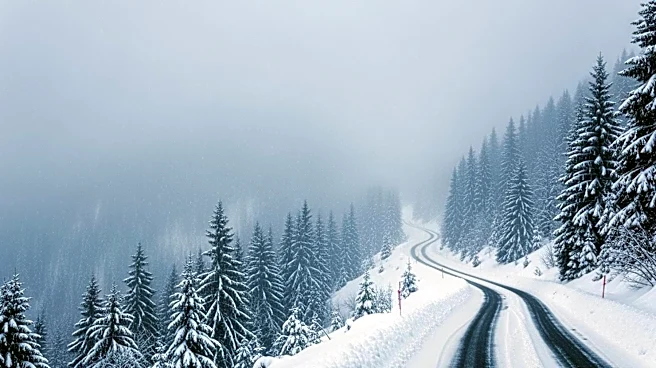
A late-season winter storm is forecasted to bring significant snowfall and strong winds across parts of Wyoming, Montana, Utah, Washington, and Oregon. The National Weather Service (NWS) has issued winter storm warnings and advisories, predicting up to 16
inches of snow in some areas. The storm is expected to create hazardous driving conditions, with poor visibility and blowing snow. The most severe impacts are anticipated in central and northern Wyoming, particularly in the Wind River Mountains East, where snow accumulations could reach 16 inches with wind gusts up to 50 mph. Other affected areas include the Bighorn Mountains along the Montana-Wyoming border, the Uinta Mountains in Utah, and the Cascades in Washington and Oregon. The NWS advises drivers to exercise caution, carry emergency supplies, and prepare for rapidly changing conditions.
Why It's Important?
The impending winter storm poses significant risks to transportation and safety across the affected states. With heavy snowfall and strong winds, travel disruptions are likely, particularly in mountainous regions and major corridors such as Interstate 80 in Wyoming and various mountain passes in Montana. The storm could impact Monday morning and evening commutes, affecting daily activities and potentially leading to delays or cancellations. The severe weather conditions also raise concerns for outdoor activities, increasing the risk of hypothermia and other cold-related hazards. Communities in high-elevation areas may face challenges due to the heavy snow, which could strain local resources and emergency services.
What's Next?
As the storm progresses, residents and travelers in the affected regions should stay informed through local weather updates and heed warnings from the NWS. Emergency services and local authorities may need to respond to weather-related incidents, including road closures and accidents. The storm's impact on infrastructure and daily life could prompt discussions on preparedness and response strategies for future weather events. Additionally, the storm may influence regional economic activities, particularly in sectors reliant on transportation and outdoor operations.