







What's Happening?
Researchers at the University of Kent have discovered that madecassic acid, a compound derived from the plant Centella asiatica, exhibits strong antibacterial properties against drug-resistant bacteria. The study, conducted in collaboration with University College
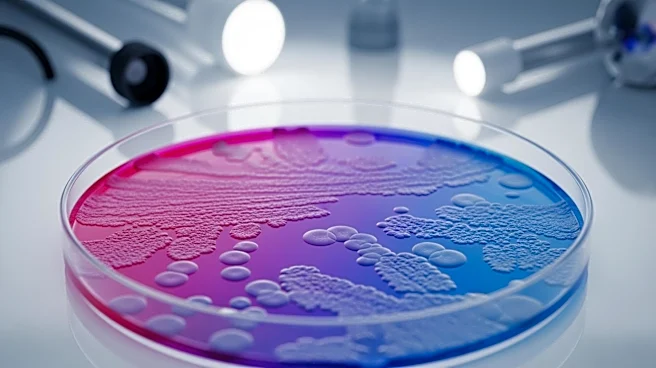
London, found that madecassic acid can inhibit the growth of antibiotic-resistant E. coli by targeting the cytochrome bd complex, a protein system crucial for bacterial respiration. The compound's structure can be modified to enhance its effectiveness, with some variants showing the ability to kill E. coli at higher concentrations.
Why It's Important?
The discovery of madecassic acid's antibacterial properties is significant in the fight against antibiotic resistance, a major global health threat. As drug-resistant infections become more prevalent, the need for new antibiotics is critical. Madecassic acid offers a potential new avenue for developing alternative antimicrobials that work differently from existing antibiotics. This could lead to more effective treatments for resistant infections, reducing the burden on healthcare systems and improving patient outcomes. Additionally, the compound's potential use in skincare products could provide new insights into maintaining a healthy skin microbiome.
What's Next?
Researchers plan to continue refining madecassic acid and its variants to improve their antibacterial effectiveness. Further studies will explore the compound's potential as a future medicine, with a focus on its application in treating drug-resistant infections. The findings may also lead to new skincare products that leverage madecassic acid's properties to support skin health. As research progresses, collaborations with pharmaceutical companies could accelerate the development of madecassic acid-based treatments, potentially leading to clinical trials and eventual market availability.