



What's Happening?
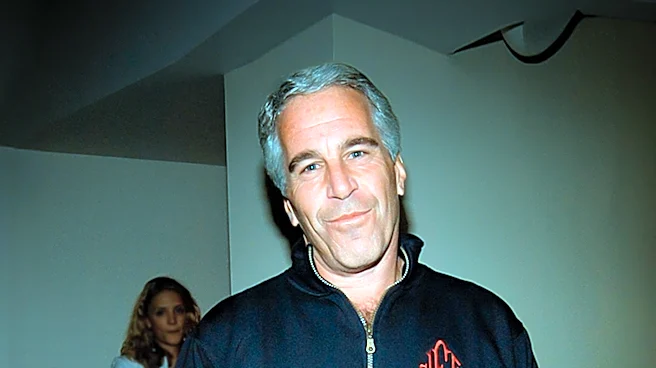
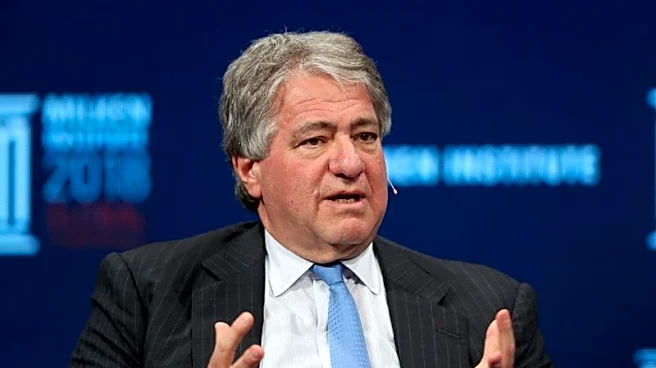
Billionaire investor Leon Black has filed a lawsuit against the House Oversight Committee, seeking to block subpoenas issued as part of its investigation into disgraced financier Jeffrey Epstein. Black refused to appear for a sworn deposition on Thursday,
arguing that the subpoenas exceed the committee's authority and seek private information unrelated to Epstein or any legitimate legislative purpose. The committee had served Black with two subpoenas in June after he reportedly declined to answer questions about nondisclosure agreements during a voluntary interview. One subpoena demanded documents related to nondisclosure agreements, and the other compelled his return for a deposition. Black's attorney, Susan Estrich, stated that the committee is on a 'fishing expedition' aimed at 'destroying Mr. Black' rather than uncovering the truth about Epstein.
Why It's Important?
This lawsuit marks a significant challenge to congressional oversight powers, particularly in high-profile investigations involving influential figures. The House Oversight Committee's ability to compel testimony and documents is crucial for its legislative and investigative functions. If Black's lawsuit is successful, it could set a precedent that limits Congress's reach in future investigations, potentially hindering efforts to uncover information related to matters of public interest. The committee's top Republican and Democratic lawmakers, James Comer and Robert Garcia, have criticized Black's actions and are considering holding him in contempt of Congress, which could lead to criminal prosecution. This legal battle highlights the tension between individual privacy rights and the public's right to know, especially when it involves individuals connected to controversial figures like Epstein.
What's Next?
The House Oversight Committee plans to discuss whether to hold Leon Black in contempt of Congress, a process that could lead to criminal charges if approved by the House and pursued by the Justice Department. Black's lawsuit will proceed in federal court, where a judge will determine the validity of the subpoenas and the extent of the committee's authority. This legal challenge could result in a protracted court battle, potentially delaying the committee's investigation into Epstein's network of wealth and influence. The outcome will have implications for the balance of power between Congress and private citizens, particularly those with significant financial and legal resources. The committee's investigation has already involved other prominent figures, including former President Bill Clinton, Commerce Secretary Howard Lutnick, and Microsoft co-founder Bill Gates, indicating the broad scope of its inquiry.
Beyond the Headlines
The legal confrontation between Leon Black and the House Oversight Committee delves into the complex ethical and legal dimensions surrounding the financial dealings of ultra-wealthy individuals and their connections to illicit activities. Black's payments of over $150 million to Epstein, even after Epstein's 2008 conviction, raise questions about due diligence, accountability, and the potential for powerful individuals to operate outside conventional scrutiny. The argument that the payments were for 'bona fide tax, estate planning and other related services' highlights the sophisticated financial mechanisms that can be used by the wealthy. This case also touches upon the broader issue of how wealth can translate into political and legal leverage, potentially allowing individuals to resist governmental oversight. The public's interest in understanding the full extent of Epstein's network and the roles played by his associates underscores the societal demand for transparency and justice, regardless of an individual's status.