






What's Happening?
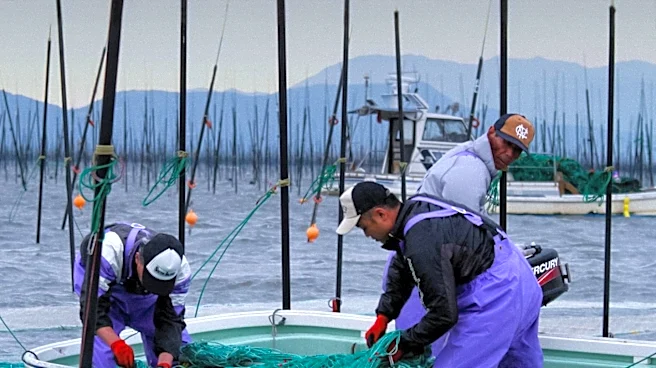
Animal Outlook, an animal rights group, has filed a citizen petition with the Maine Department of Agriculture, Conservation, and Forestry (DACF) to establish salmon welfare standards for the state's aquaculture industry. The petition calls for comprehensive
best management practices (BMPs) to protect farmed fish, including zero tolerance for abusive practices, humane handling requirements, mandatory reporting, biosecurity training, and daily welfare monitoring with veterinary oversight. This action follows Animal Outlook's previous complaints regarding alleged animal cruelty at Cooke Aquaculture's Bingham, Maine facility. Cooke Aquaculture, in response, highlighted Animal Outlook's ties to corporations and individuals with vested interests in plant-based vegan manufacturing, noting that the group is linked to VegInvest, a fund supporting seafood analog companies. Cooke Aquaculture also stated that the Maine salmon aquaculture industry is already highly regulated by numerous state and federal agencies and independent certification programs.
Why It's Important?
This petition marks a significant effort to introduce the first enforceable animal welfare standards for farmed fish in the U.S., potentially setting a precedent for other states and the broader aquaculture industry. If adopted, these rules could lead to increased operational costs for aquaculture businesses in Maine due to new compliance requirements, impacting their economic viability and competitiveness. The debate also highlights the growing tension between animal welfare advocates and the traditional aquaculture industry, particularly as plant-based alternatives gain traction. The industry's counter-argument, pointing to Animal Outlook's ties to vegan manufacturing, raises questions about potential conflicts of interest and the motivations behind such petitions, adding a layer of complexity to the regulatory discussion. This development could influence consumer perceptions of farmed seafood and further drive demand for plant-based options.
What's Next?
Under Maine’s Administrative Procedure Act, the submission of a verified petition by 150 or more registered voters triggers rulemaking proceedings within 60 days. These proceedings will involve public hearings and a lengthy input process, during which various stakeholders, including environmental groups, aquaculture companies, and the public, will have the opportunity to present their views. A key consideration in these proceedings will be the requirement to reduce economic burdens on businesses through flexible or simplified reporting requirements. The outcome of this petition could lead to the implementation of new regulations, potentially altering operational practices for salmon farms in Maine, or it could be rejected, maintaining the status quo. The process will likely be closely watched by both animal welfare organizations and the aquaculture industry nationwide.
Beyond the Headlines
The petition in Maine transcends immediate regulatory concerns, touching upon broader ethical and economic shifts within the food industry. The push for animal welfare standards in aquaculture reflects an evolving societal expectation for more humane treatment of all animals, including fish, which have historically received less attention than terrestrial livestock. This movement is intertwined with the rise of the plant-based food industry, suggesting a systemic shift towards more sustainable and ethical food production. The controversy also highlights the increasing scrutiny faced by traditional animal agriculture from advocacy groups, often with financial backing from alternative protein investors. This dynamic could lead to a more polarized debate over food production methods, influencing consumer choices, investment trends, and the future direction of food policy in the U.S.