
What's Happening?
Foot-and-mouth disease (FMD) has escalated into a serious animal-health crisis in South Africa, with the virus now spreading into wildlife populations. Initially a threat to livestock production and agricultural
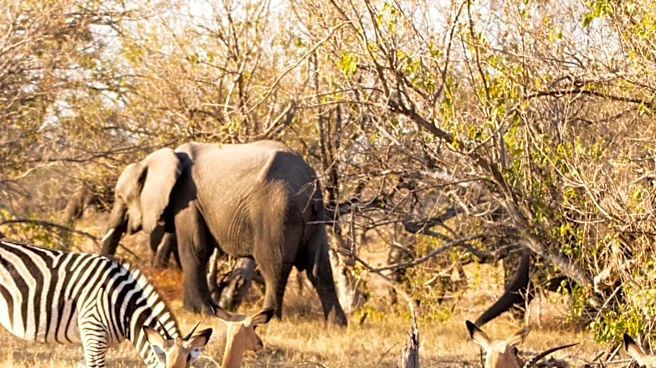
exports, FMD is now raising concerns for wildlife conservation, game ranching, protected areas, and the long-term sustainability of the country's wildlife economy. Department of Agriculture officials have reported confirmed and suspected FMD infections in wildlife across several regions, particularly KwaZulu-Natal and Limpopo, affecting species such as buffalo, roan antelope, sable antelope, and kudu. The World Organisation for Animal Health (WOAH) identifies African buffalo as significant maintenance hosts of the FMD virus, capable of carrying it without showing obvious clinical symptoms for extended periods. This spread necessitates a broader approach to disease management, integrating the protection of livestock, wildlife, agricultural livelihoods, and conservation areas as part of a national biosecurity challenge. The disease is highly contagious among cloven-hoofed animals and can spread through direct contact, airborne particles, contaminated vehicles, equipment, and even humans acting as mechanical transporters of the virus.
Why It's Important?
The spread of FMD into South Africa's wildlife has significant economic consequences, including restrictions on livestock movements and sales, reduced access to international export markets, and financial losses for both commercial and emerging farmers. The crisis also leads to increased expenditure on vaccination, veterinary services, and biosecurity measures, disrupting agricultural supply chains and livestock auctions. The wildlife industry, with its commercial and conservation value, is particularly vulnerable, as FMD infection can compromise disease-free status, affecting animal movement, breeding programs, and international trade. The economic impact extends to rural communities dependent on farming, game ranching, tourism, and related industries. The incident at Addo Elephant National Park, where FMD was confirmed in kudu, highlights the difficulty of containing the disease in open ecological environments, as wild animals can cross boundaries and come into contact with livestock, posing a continuous risk to the agricultural sector.
What's Next?
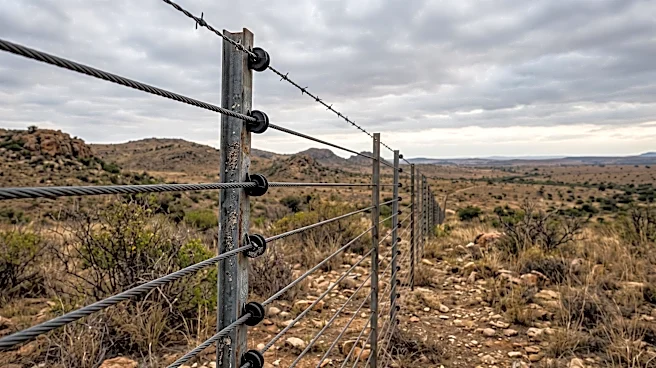
Containing FMD requires coordinated action across government departments, veterinary services, farmers, wildlife authorities, and private landowners. Several risk factors, such as uncontrolled animal movement, inadequate fencing, contaminated transport, inconsistent biosecurity practices, and insufficient surveillance, need immediate attention. Compliance with veterinary instructions and movement controls, as mandated by the Animal Diseases Act 35 of 1984, is a legal responsibility. The Department of Agriculture must ensure adequate support for disease surveillance, laboratory capacity, vaccination programs, veterinary personnel, and emergency response mechanisms. Closer cooperation between national and provincial agricultural departments, State Veterinary Services, South African National Parks, private wildlife veterinarians, and farmers' associations is crucial. Government accountability will involve transparent outbreak reporting, timely access to vaccines, reliable funding, consistent enforcement, and measurable progress in containing the disease. The protection of South Africa's wildlife heritage must be an integral part of the national response, recognizing that African buffalo and other susceptible wildlife cannot be an afterthought in disease control strategies.
Beyond the Headlines
The FMD crisis in South Africa underscores the complex interplay between agricultural practices, wildlife conservation, and national biosecurity. The economic and social fabric of many rural communities is deeply intertwined with the health of both livestock and wildlife populations. The challenge extends beyond immediate disease containment to long-term ecological management and sustainable economic development. The incident highlights the ethical considerations of managing disease in shared ecosystems, where human activities and natural wildlife movements intersect. The need for robust biosecurity measures and early detection systems is paramount, not only to protect economic interests but also to preserve biodiversity and maintain ecological balance. The crisis also brings to light the importance of public awareness and participation, as individuals, from farmers to tourists, play a role in preventing the spread of infection. This situation could serve as a critical case study for developing integrated disease management strategies in other regions facing similar challenges.