






What's Happening?
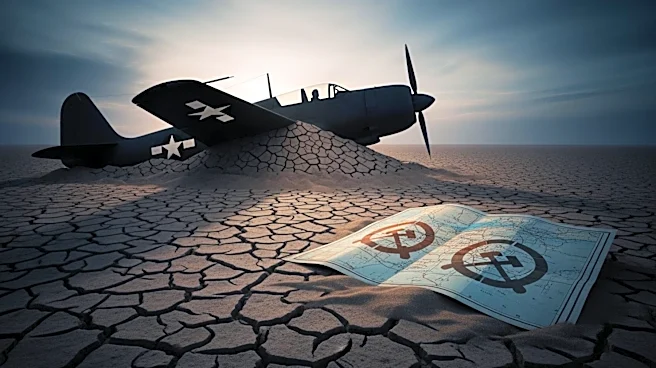
During the Cold War, the Air Force and CIA collaborated through the Air Resupply and Communications (ARC) Service to counteract Communist influences globally. This joint operation involved unconventional warfare support, including inserting and extracting
special operators into enemy territories. A significant event highlighting this collaboration was the crash of an SA-16 Albatross in Death Valley, California, on January 24, 1952. The aircraft, part of the 580th ARC Wing, was on a routine night maneuvering practice when it experienced engine failure, leading to a crash. Fortunately, all six airmen onboard parachuted to safety, although two sustained non-life-threatening injuries. The crash site remains a relic of Cold War history, with the wreckage still visible in the mountains of Death Valley.
Why It's Important?
The crash of the SA-16 Albatross and the subsequent revelation of the ARC Service underscore the lengths to which the U.S. government went to counteract Communist threats during the Cold War. This collaboration between the Air Force and CIA highlights the strategic importance of unconventional warfare and intelligence operations in national defense. The incident also serves as a historical reminder of the risks and challenges faced by military personnel during this tense period. The continued presence of the wreckage in Death Valley offers a tangible connection to this era, providing insight into the covert operations that were critical to U.S. foreign policy and military strategy.