







What's Happening?
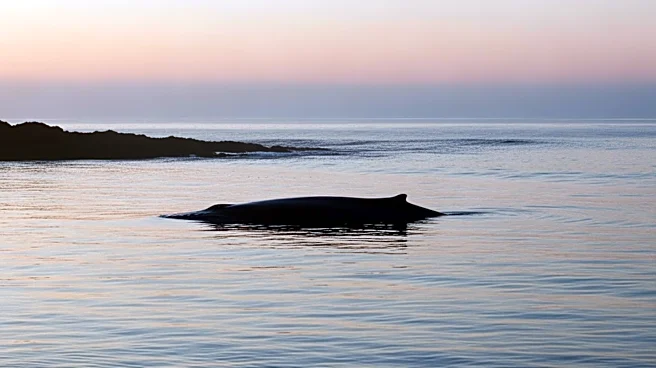
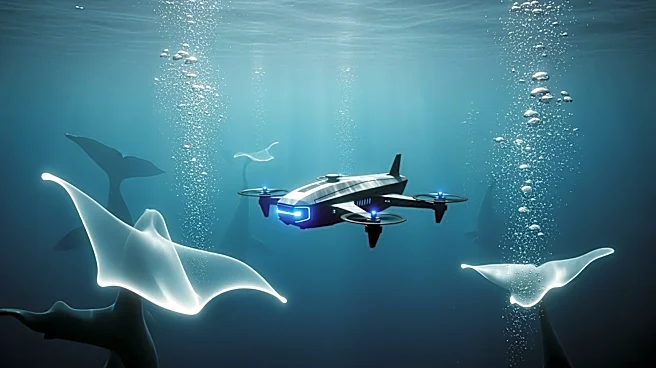
Scientists have developed an autonomous underwater robot capable of tracking sperm whales by detecting their echolocation clicks and adjusting its course in real-time. This innovation, part of Project CETI, utilizes a SeaExplorer underwater glider equipped
with a four-hydrophone acoustic array. The system allows for long-term monitoring of sperm whales without the need for physical tags or fixed sensors. The robot's passive listening system can detect whale vocalizations from several kilometers away, enabling it to follow the whales' movements and potentially observe their behavior over extended periods. This technology marks a significant advancement in marine biology, offering insights into whale communication and behavior.
Why It's Important?
The development of this autonomous robot represents a breakthrough in marine research, particularly in understanding sperm whale communication and behavior. By enabling continuous observation, researchers can gain deeper insights into how these whales interact, communicate, and respond to environmental changes, including human-made noise. This could lead to more effective conservation strategies, such as adjusting shipping routes or speeds to minimize disturbances to whale populations. The ability to track individual whales and their interactions over time could also enhance our understanding of marine ecosystems and the impact of human activities on marine life.
What's Next?
Future developments may focus on improving the robot's ability to maintain contact with moving whales and enhancing its range detection capabilities. Researchers aim to use this technology to study the long-term effects of environmental pressures on whale behavior and communication. The data collected could inform policy decisions and conservation efforts, potentially leading to regulations that protect sensitive marine areas from human interference. Continued advancements in this technology could also pave the way for similar applications in studying other marine species and ecosystems.
Beyond the Headlines
This technology not only aids in conservation but also challenges our understanding of communication and intelligence in non-human species. By studying sperm whale vocalizations and interactions, scientists may uncover new insights into the cognitive abilities of these animals, contributing to broader discussions about animal intelligence and communication. The ethical implications of such research could influence how we perceive and interact with marine life, potentially leading to more respectful and informed conservation practices.