
What's Happening?
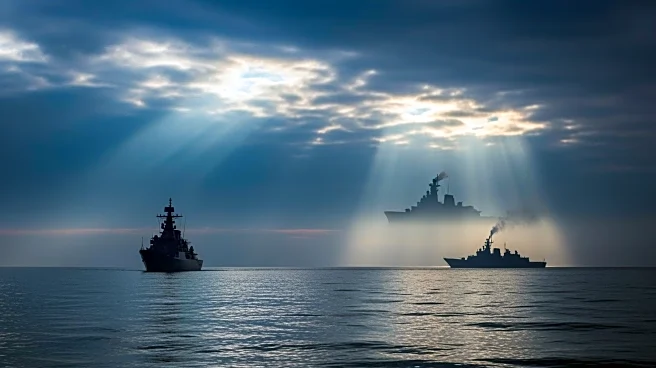
South Africa has requested Iran to withdraw its naval ships from active participation in the 'Will for Peace 2026' naval exercises, opting instead for an observer role. This decision comes after diplomatic
discussions and concerns that Iran's military presence could jeopardize South Africa's trade and diplomatic relations with the United States. The naval drills, led by China, involve several BRICS and BRICS-Plus countries, including Russia and South Africa. The situation intensified following a warning from U.S. President Trump, who announced a 25% tariff on any country conducting business with Iran. This move is seen as a strategic effort by South Africa to maintain its duty-free access to American markets under the African Growth and Opportunity Act (AGOA), which is crucial for its economy.
Why It's Important?
The decision by South Africa to request Iran's withdrawal from the naval exercises highlights the significant influence of U.S. economic policies on international relations. South Africa's reliance on AGOA for duty-free access to U.S. markets underscores the economic leverage the U.S. holds over its trading partners. The imposition of tariffs on countries doing business with Iran could have widespread implications, potentially affecting global trade dynamics and diplomatic relations. For South Africa, maintaining favorable trade terms with the U.S. is vital, especially as it seeks an extension of AGOA benefits. This situation also reflects the broader geopolitical tensions involving major powers like the U.S., China, and Russia, with smaller nations navigating complex diplomatic landscapes.
What's Next?
As South Africa navigates its diplomatic position, it will likely continue to balance its relationships with major global powers. The decision to limit Iran's role in the naval exercises may help preserve its trade benefits with the U.S., but it also highlights the ongoing challenges of maintaining neutrality in a polarized international environment. The U.S. tariff policy could prompt other nations to reassess their trade relationships with Iran, potentially leading to shifts in global alliances and economic strategies. South Africa's actions may set a precedent for other countries facing similar pressures, influencing future diplomatic and economic decisions.