









What's Happening?
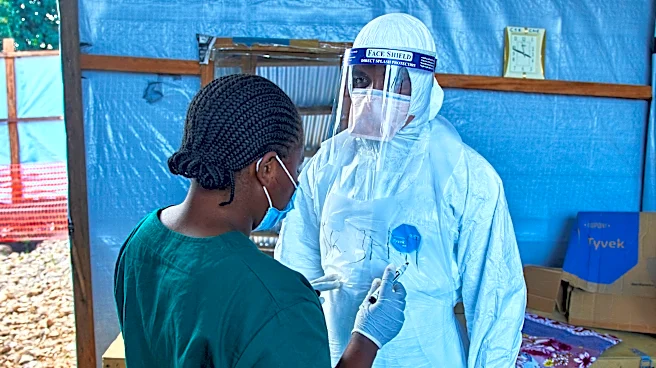
A U.S. citizen working for a humanitarian organization in Congo has tested positive for the Ebola virus, according to the U.S. Centers for Disease Control and Prevention (CDC). This development comes as the Central African country faces a rapidly expanding
Ebola outbreak, which is the fastest-growing on the continent with 1,830 confirmed cases and 648 deaths. The outbreak, caused by the Bundibugyo virus, has no approved vaccine or treatment. Efforts to contain the virus are challenged by a funding gap, attacks on health centers, and ongoing conflict in eastern Congo. Clinical trials for treatment have recently begun, aiming to combat the virus.
Why It's Important?
The Ebola outbreak in Congo poses significant public health challenges, not only for the region but also for international health security. The involvement of a U.S. citizen highlights the global nature of infectious disease threats and the need for international cooperation in outbreak response. The lack of an approved vaccine or treatment for the Bundibugyo virus underscores the urgency for medical research and development. The outbreak's rapid spread and the challenges in containment efforts could have broader implications for global health policies and emergency preparedness strategies.
What's Next?
The CDC is collaborating with the affected individual's employer, U.S. agencies, and Congolese partners to prevent further transmission and identify close contacts. The situation may prompt increased international support and funding to address the outbreak. The ongoing clinical trials could lead to potential breakthroughs in treatment, but the immediate focus remains on containment and prevention. The U.S. and other countries may need to reassess their strategies for handling such outbreaks, including the logistics of evacuating and treating infected citizens abroad.