










What's Happening?
European airport executives are expressing concerns over the European Union's new Entry/Exit System (EES), which is causing significant disruptions during peak travel periods. Marco Troncone, the chief executive of Rome's Fiumicino and Ciampino airports,
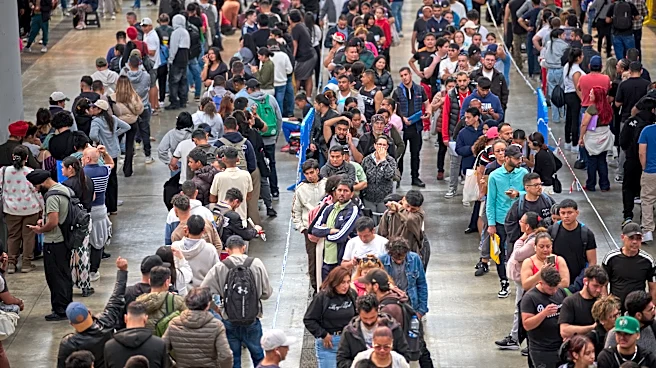
has warned that the system is incompatible with current passenger volumes and may need to be suspended to prevent a 'disaster.' The EES, which requires travelers entering the Schengen area to register fingerprints, photos, and passport details through self-service kiosks, has led to long queues and delays. The system, which came into full effect in April, applies across 29 Schengen countries. Despite the EU's assertion that the EES will eventually streamline travel by replacing manual passport stamps with a digital system, the current implementation has been problematic. The Department of Foreign Affairs and Trade has advised travelers to prepare for delays of up to six hours at European airports, with queues for the kiosks running long.
Why It's Important?
The implementation of the EES is significant as it represents a major shift in how travel is managed within the Schengen area, impacting millions of travelers. The system's current inefficiencies could have broader implications for the travel industry, potentially affecting tourism and business travel. Airports may face increased operational challenges, and travelers could experience heightened frustration and inconvenience. The situation underscores the complexities of implementing large-scale digital systems in high-traffic environments and highlights the need for robust infrastructure and planning. The disruptions could also influence public perception of the EU's ability to manage cross-border travel efficiently, potentially affecting future policy decisions.
What's Next?
If the current issues with the EES persist, European airports may consider suspending the system during peak travel periods to mitigate disruptions. This could lead to further discussions among EU member states about the system's implementation and potential adjustments to improve its efficiency. Stakeholders, including airport authorities and government agencies, may need to collaborate on solutions to address the system's shortcomings. Additionally, travelers may need to adjust their travel plans and expectations, potentially relying more on pre-submission of data through dedicated apps to reduce delays.