
What's Happening?
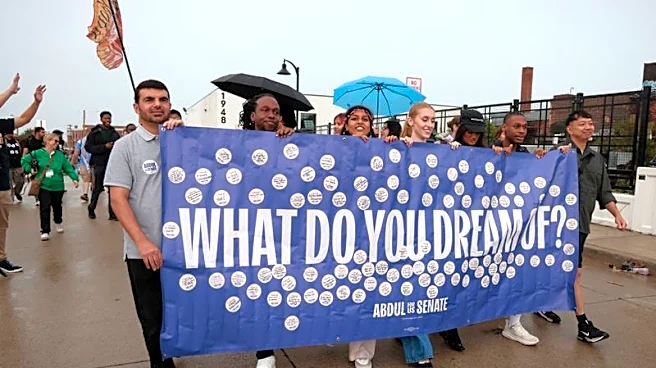
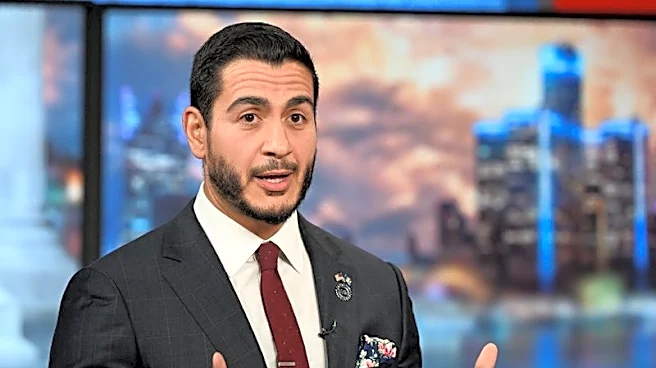
Elizabeth Warren, a Democratic U.S. Senator from Massachusetts, has thrown her support behind Abdul El-Sayed in the Michigan Senate race, a contest that is seen as pivotal for the Democratic Party's future.
El-Sayed, a former Detroit public health director and Rhodes Scholar, is running against Representative Haley Stevens for the Democratic nomination. While Stevens is backed by the Democratic establishment, including Senate Minority Leader Chuck Schumer and Governor Gretchen Whitmer, El-Sayed has garnered support from progressive leaders such as Bernie Sanders and Alexandria Ocasio-Cortez. The race is significant as it represents a broader ideological battle within the Democratic Party, with El-Sayed aligning more closely with progressive values, despite not identifying as a Democratic Socialist. Recent polls show El-Sayed leading, suggesting a potential shift in voter sentiment in this key swing state.
Why It's Important?
The Michigan Senate race is crucial for the Democratic Party as it seeks to regain control of the Senate. Winning this seat is essential for Democrats, who need to secure four Republican-held seats while maintaining their current positions in states like Michigan. The outcome of this race could influence the party's strategy and messaging leading up to the 2028 presidential election. A victory for El-Sayed would signal a shift towards more progressive policies, potentially reshaping the party's platform. Conversely, a win for Stevens would reinforce the influence of moderate Democrats and their approach to key issues such as U.S.-Israel relations. The race also highlights the ongoing debate within the party about the best path forward to appeal to a diverse electorate and reclaim the White House.
What's Next?
The primary election will determine which Democratic candidate will face former Representative Mike Rogers, a Republican, in the general election. The outcome will be closely watched as an indicator of the Democratic Party's direction and its ability to appeal to voters in swing states. Should El-Sayed win, it could embolden the progressive wing of the party and influence future policy discussions. If Stevens prevails, it may reinforce the establishment's approach to maintaining a centrist stance. The general election will further test the party's strategies and could have significant implications for the 2028 presidential race.