



What's Happening?
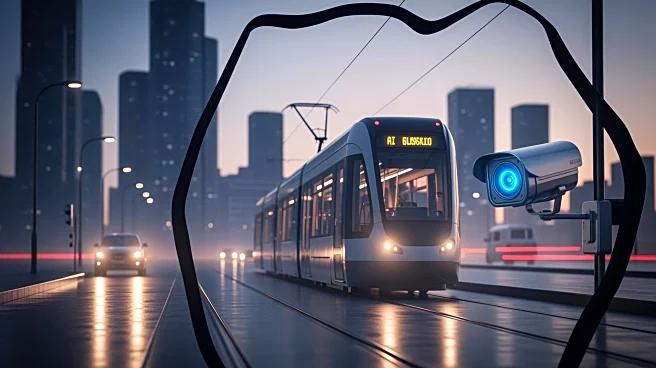
Starting next week, the Southeastern Pennsylvania Transportation Authority (SEPTA) will begin using AI-powered cameras on trolleys to catch and ticket vehicles illegally parked in trolley lanes and stops. This initiative, announced by the Philadelphia
Parking Authority, aims to improve the efficiency and safety of public transit by reducing obstructions caused by parked vehicles. The AI systems, developed by Hayden AI, will be installed on 30 trolleys across six lines in the city. These cameras will identify vehicles that block trolley paths and transmit the license plate information to the Philadelphia Parking Authority. Initially, violators will receive warnings, but starting April 1, a $51 fine will be imposed. This move follows a successful trial with SEPTA buses, which have been using similar technology since last year.
Why It's Important?
The implementation of AI cameras on trolleys is significant for improving public transportation in Philadelphia. Illegally parked vehicles in trolley lanes cause delays and safety hazards, affecting thousands of commuters daily. By enforcing parking rules more effectively, the initiative aims to enhance the reliability and speed of public transit, which is crucial for a city where a significant portion of the population relies on public transportation. This technological advancement not only addresses traffic congestion but also supports economic opportunities by ensuring efficient transit access for all residents, particularly those without personal vehicles.
What's Next?
As the AI camera systems are rolled out, stakeholders will likely monitor their impact on traffic flow and public transit efficiency. The Philadelphia Parking Authority and SEPTA will assess the effectiveness of the fines in deterring illegal parking. Additionally, there may be discussions on expanding the use of AI technology to other areas of the city's transportation network. Public feedback and data collected from the initial implementation phase will be crucial in determining future adjustments or expansions of the program.