











What's Happening?
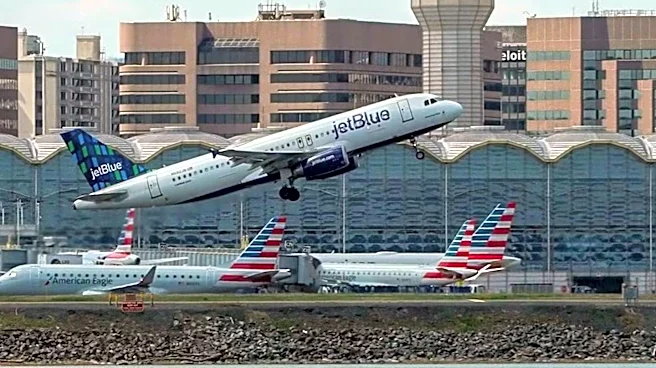
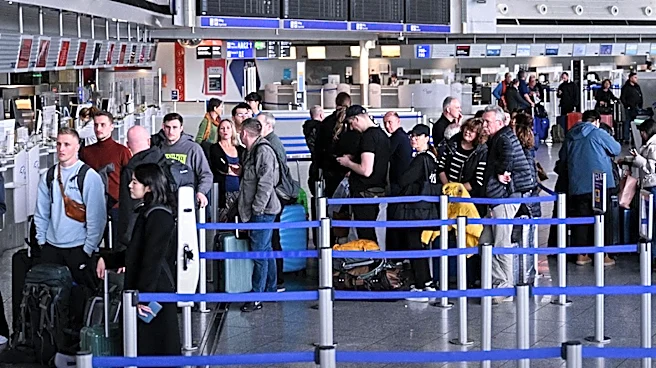
The U.S. aviation system is experiencing significant strain as summer travel reaches record levels. Nashville International Airport, among the fastest-growing airports in the country, exemplifies this trend. The Transportation Security Administration
is preparing to screen over 18 million travelers during the Fourth of July weekend. Airlines are operating fewer flights but carrying more passengers than ever, leading to crowded planes and airports. The industry has invested billions in optimizing operations and is now urging the government to modernize the air traffic control system. Chris Sununu, head of Airlines For America, highlighted the outdated and understaffed air traffic control system as a major threat to the airline industry. The Federal Aviation Administration (FAA) is short of its staffing targets, which has led to delays and stoppages. The FAA has announced an $875 million contract for AI-enhanced software to improve flight coordination.
Why It's Important?
The current situation underscores the urgent need for modernization of the U.S. air traffic control system to keep pace with growing travel demand. The strain on the aviation system could impact the economy by affecting travel efficiency and customer satisfaction. Airlines are pushing for government action to address these issues, which could lead to significant policy changes and investments in infrastructure. The modernization efforts, if successful, could enhance the reliability and capacity of the aviation system, benefiting both the industry and travelers. However, the challenges of balancing supply and demand remain, and the effectiveness of AI-enhanced solutions is yet to be fully realized.
What's Next?
The aviation industry and government are likely to continue discussions on funding and implementing modernization efforts. The FAA's new AI-enhanced software is expected to play a role in improving system efficiency, but further investments and policy changes will be necessary. Stakeholders, including airlines and government agencies, will need to collaborate to address staffing shortages and technological gaps. The outcome of these efforts could shape the future of air travel in the U.S., potentially leading to a more efficient and reliable system.