






What's Happening?
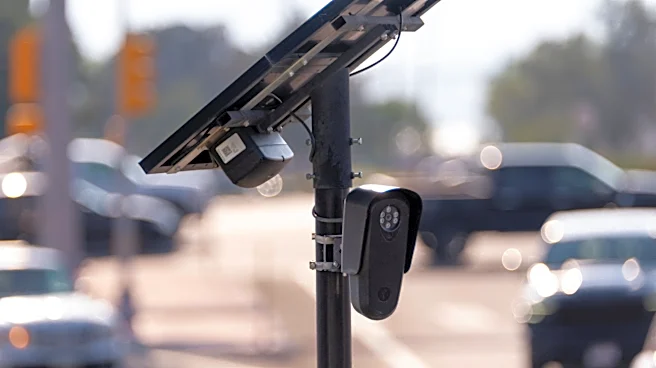
Flock Safety, a prominent vehicle surveillance company, has developed a new artificial intelligence tool for police, initially named Nightshift and now called OS Investigate, which can identify drivers and track vehicles based on movement patterns. This
development contradicts the company's previous public statements that its technology could not recognize or track individuals. The tool leverages a network of cameras in over 6,000 communities to log vehicle movements. It can identify potential witnesses by analyzing how frequently their cars pass through a specific area or pinpoint a driver's 'associates' by tracking vehicles that appear together across cameras. The system integrates with police case files, 911 dispatch logs, and commercial identity records, allowing license plates to be linked to names, home addresses, and relatives. It also enables searches for individuals in a defined area based solely on physical descriptions. The software includes 69 prewritten prompts for officers, who can also create their own, and has access to a wide range of data including arrest records, ballistics results, and commercial databases containing personal information.
Why It's Important?
This new AI tool from Flock Safety raises significant privacy and constitutional concerns, particularly regarding the scope of surveillance and potential for warrantless access to personal data. Previously, Flock's system focused on checking license plates against a list of wanted vehicles, largely ignoring others. OS Investigate, however, inverts this by allowing police to cast suspicion on drivers based on their movement patterns, even without a specific crime or known suspect. This capability could lead to broad, untargeted surveillance, potentially eroding civil liberties and the expectation of privacy in public spaces. The integration of commercial databases with law enforcement tools further blurs the lines between public safety and personal data exploitation. The tool's ability to link vehicle movements to individuals' identities and relationships could create comprehensive profiles of citizens, raising questions about data security, potential misuse, and the legal frameworks governing such advanced surveillance technologies. This development could set a precedent for how AI is used in policing, impacting the rights of individuals across the U.S.
What's Next?
Flock Safety states that OS Investigate is currently in development and being tested with a small group of law enforcement partners, indicating that its final capabilities may evolve. The company faces increasing bipartisan political pressure and a history of officers misusing its platform, alongside acts of vandalism against its cameras. This new tool is likely to intensify scrutiny from privacy advocates, legal experts, and civil liberties organizations, potentially leading to legal challenges and calls for stricter regulations on AI-powered surveillance. Lawmakers may consider new legislation to address the constitutional implications of such technology, particularly concerning warrantless searches and data collection. The ongoing debate will likely focus on balancing public safety needs with individual privacy rights, and how to ensure accountability and transparency in the deployment of advanced surveillance systems by law enforcement agencies across the U.S. The public's reaction and the actions of advocacy groups will play a crucial role in shaping the future of this technology.
Beyond the Headlines
The introduction of Flock Safety's OS Investigate tool represents a significant shift in the landscape of law enforcement surveillance, moving beyond simple vehicle tracking to sophisticated behavioral analysis and identity correlation. This technology has the potential to create a 'panopticon' effect, where individuals are constantly monitored and their movements analyzed, fundamentally altering the relationship between citizens and the state. The ethical implications are profound, as the system can infer associations and patterns of life, potentially leading to algorithmic bias and the targeting of innocent individuals based on statistical probabilities rather than concrete evidence. The reliance on commercial databases for personal information also highlights the growing convergence of private data collection and public policing, raising questions about data ownership, consent, and the potential for data breaches. This development could trigger a broader societal discussion about the limits of technological intervention in daily life, the definition of privacy in the digital age, and the need for robust oversight mechanisms to prevent the abuse of powerful AI tools by government entities.