

What's Happening?
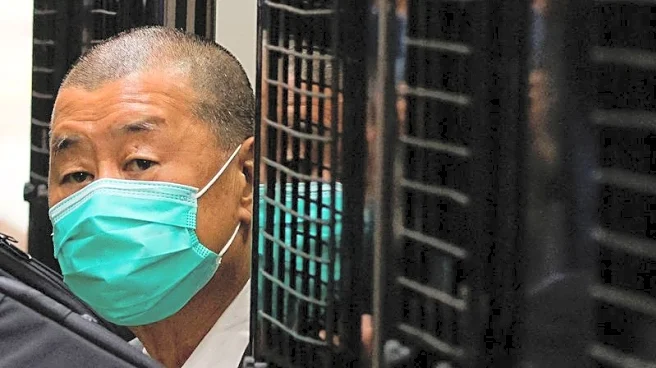
The children of Jimmy Lai, a pro-democracy former Hong Kong media mogul, are appealing to President Trump and other global leaders to secure their father's release from a 20-year prison sentence in China. Lai was convicted under a national security law
imposed by Beijing, which has been criticized for stifling dissent in Hong Kong. His son, Sebastien Lai, emphasized the urgency of the situation, citing his father's deteriorating health. The family hopes that President Trump's potential visit to Beijing in April could be pivotal in negotiating Lai's release. Secretary of State Marco Rubio has condemned the sentence as unjust, urging for Lai's humanitarian parole.
Why It's Important?
Jimmy Lai's case is emblematic of the broader tensions between the U.S. and China, particularly concerning human rights and freedom of expression. The situation underscores the challenges faced by pro-democracy activists in Hong Kong and the international community's role in advocating for their rights. President Trump's involvement could influence U.S.-China relations, especially as both nations navigate complex issues like trade and Taiwan. The outcome of this case may set a precedent for how the U.S. and other countries engage with China on human rights issues, potentially impacting diplomatic strategies and international alliances.
What's Next?
As President Trump considers a visit to Beijing, the focus will be on whether he can leverage this opportunity to advocate for Jimmy Lai's release. The U.S. government may face increased pressure to address human rights concerns in its dealings with China. Additionally, other world leaders, such as British Prime Minister Keir Starmer, have already raised Lai's case with Chinese officials, indicating a potential for coordinated international efforts. The response from China and the international community will be crucial in determining the future of U.S.-China relations and the global stance on human rights advocacy.