







What's Happening?
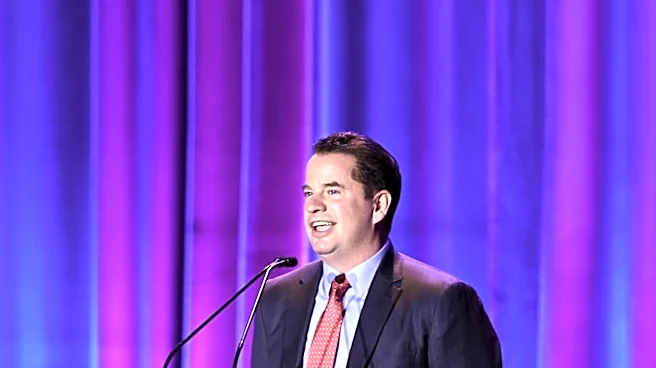
Democratic Representative Eric Swalwell has announced his intention to resign from Congress following allegations of sexual assault. The announcement comes shortly after he suspended his campaign for California governor. Swalwell expressed regret to his family,
staff, and constituents, stating that he plans to fight the allegations, which he claims are false. The House Ethics Committee has launched an investigation into the allegations, which include claims from an ex-staffer and three other women. Republican Rep. Anna Paulina Luna had threatened to force a vote to expel Swalwell if he did not resign. Swalwell's resignation will reduce the number of House Democrats to 213 members.
Why It's Important?
Swalwell's resignation amid serious allegations highlights the ongoing challenges of addressing misconduct in political office. The situation underscores the importance of due process and the impact of such allegations on political careers and party dynamics. With the House Democrats losing a member, the balance of power in Congress could be affected, influencing legislative priorities and decision-making. The case also raises broader questions about accountability and ethics in politics, as well as the processes for handling allegations against public officials.
What's Next?
Following Swalwell's resignation, it will be up to California Governor Gavin Newsom to decide whether to call a special election to fill the vacant seat. The decision will depend on state election codes and the timing of the vacancy. The ongoing investigation by the House Ethics Committee and potential criminal investigations will continue to unfold, potentially impacting Swalwell's future and the broader political landscape. The situation may also prompt discussions on improving mechanisms for addressing misconduct allegations in Congress.