

What's Happening?
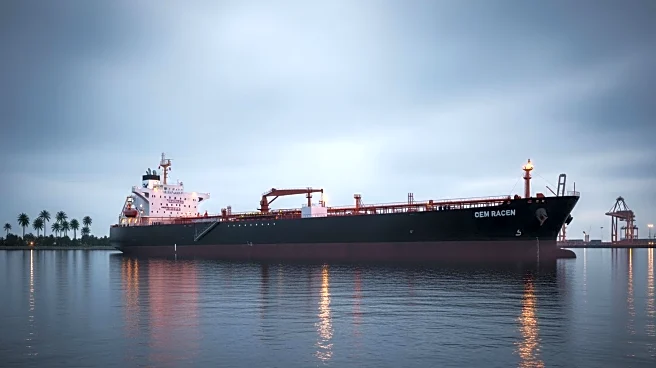
A Greek-owned fuel tanker, Nicos I.V., has arrived at a Cuban fuel terminal in Matanzas, marking a significant development amidst the island's ongoing fuel shortages. The tanker, which has a capacity of over 300,000 barrels, was seen docked at the port,
although it remains unclear if it was fully laden. This arrival is notable as it is the first known fuel shipment to Cuba since early January. The U.S. has reportedly enforced a full embargo on fuel shipments to Cuba, aiming to pressure the Communist government. Previously, the U.S. had intercepted another tanker, Seahorse, which was en route from Venezuela to Cuba. Meanwhile, Mexico has been allowed to send humanitarian aid, though not fuel, to Cuba. The situation is further complicated by a recent fire at Cuba's main refinery, which, according to the Ministry of Energy and Mines, did not impact operations.
Why It's Important?
The arrival of the Nicos I.V. tanker is crucial as it highlights the severe fuel shortages Cuba is facing, with reports suggesting the island has less than 20 days of supply left. This shortage has led to emergency measures and rationing, affecting daily life and economic activities. The U.S. embargo on fuel shipments is part of broader geopolitical tensions, aiming to exert pressure on Cuba's government. The situation also underscores the island's reliance on external fuel sources, particularly from allies like Venezuela and potentially Russia, which is considering sending humanitarian aid. The fuel crisis could have significant implications for Cuba's energy security and economic stability, affecting everything from transportation to power generation.
What's Next?
Cuba's government may need to seek alternative fuel sources or negotiate with allies to alleviate the shortages. Russia's potential involvement in providing aid could alter the geopolitical dynamics, especially if it leads to increased Russian influence in the region. The U.S. might face international pressure to ease its embargo, particularly if the humanitarian situation worsens. Additionally, Cuba may need to accelerate efforts to diversify its energy sources and improve domestic production capabilities to reduce dependency on foreign fuel.
Beyond the Headlines
The fuel crisis in Cuba highlights broader issues of energy dependency and geopolitical influence in the Caribbean. The U.S. embargo reflects ongoing tensions with Cuba's government, while Russia's potential aid could signify a shift in regional alliances. The situation also raises questions about the sustainability of Cuba's energy infrastructure and the need for investment in renewable energy sources. Furthermore, the crisis could impact Cuba's tourism industry, a vital part of its economy, as fuel shortages affect transportation and services.