


What's Happening?
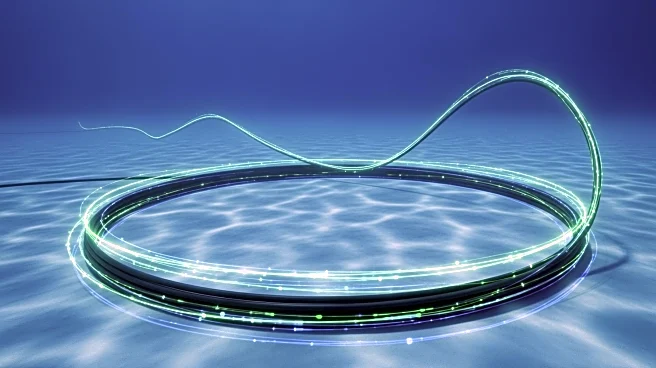
ASN and OMS have commenced the Tamtam subsea cable project in partnership with Vanuatu-based Prima. The project, which officially began on Thursday, aims to establish a 375-km subsea cable connecting Vanuatu and New Caledonia, with potential extensions
to Fiji and Australia. This initiative is designed to provide Vanuatu with a backup international connectivity route and extend domestic fiber connectivity to several local areas. Additionally, the cable will incorporate climate-change monitoring capabilities using seismic sensors for tsunami detection. This project is part of a broader industry effort to transform subsea infrastructure into 'Scientific Monitoring and Reliable Telecommunications' (SMART) cables, which serve both scientific and resilience purposes.
Why It's Important?
The Tamtam cable project is significant for Vanuatu as it enhances the country's telecommunications infrastructure, providing a more reliable and resilient connectivity option. This is crucial for Vanuatu, which is vulnerable to natural disasters, as the cable's monitoring capabilities can improve early warning systems and public safety. Economically, the project is expected to boost Vanuatu's connectivity, potentially enhancing trade and communication with neighboring regions. The integration of climate monitoring technology also positions Vanuatu as a leader in using telecommunications infrastructure for environmental resilience, which could serve as a model for other island nations facing similar challenges.
What's Next?
The Tamtam cable is scheduled to be operational by the end of 2027. As the project progresses, stakeholders will likely focus on ensuring the successful deployment and integration of the cable's monitoring systems. The project may also prompt further collaborations between telecommunications companies and scientific communities to enhance the capabilities of subsea cables. Additionally, the successful implementation of this project could lead to similar initiatives in other regions, further advancing the use of telecommunications infrastructure for environmental monitoring and disaster preparedness.