



What's Happening?
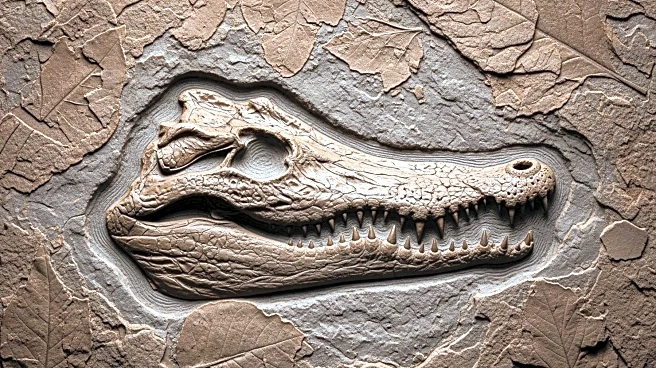
Scientists have identified a new species of ancient crocodile, Galahadosuchus jonesi, in Gloucestershire, England. This 215-million-year-old crocodile relative, discovered in a quarry, was built for speed with an upright posture and long, slender legs.
The fossil, originally collected in 1969, was re-examined by researchers from the Natural History Museum London and UCL, revealing distinct morphological differences from previously known species. The discovery provides insights into the diversity of life before the Triassic-Jurassic mass extinction, a period marked by volcanic upheaval and climate disruption.
Why It's Important?
The identification of Galahadosuchus jonesi expands the understanding of early crocodylomorph diversity and their adaptation strategies. This discovery highlights the evolutionary pathways that allowed certain species to thrive before a major extinction event. Understanding these adaptations can offer valuable lessons on how life reorganizes in response to environmental crises. The research also underscores the importance of re-examining existing fossil collections to uncover new species and gain insights into prehistoric ecosystems.
What's Next?
Further research is needed to explore the ecological niches occupied by Galahadosuchus jonesi and its relatives. Scientists aim to conduct biomechanical studies to better understand the locomotion and lifestyle of this ancient predator. The findings contribute to the broader study of early crocodile evolution and may lead to the discovery of additional species in the region.