







What's Happening?
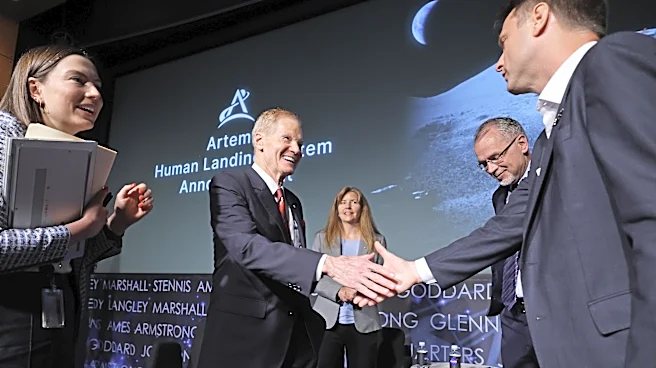
NASA has announced the selection of three companies—Astrobotic, Firefly Aerospace, and Intuitive Machines—to conduct four new missions to the Moon by late 2028. This initiative is part of NASA's Moon Base Program, which aims to establish the first U.S.
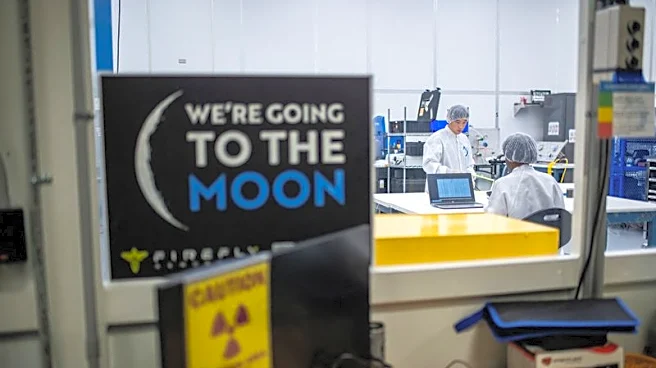
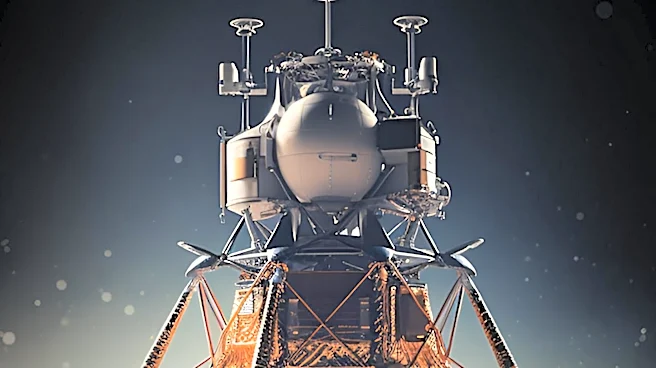
outpost on the lunar surface. The total funding for these missions is nearly $600 million. Firefly Aerospace, for instance, will utilize its Blue Ghost lander design to deliver three NASA science instruments to the Moon. This mission is expected to be completed in approximately two years, which is half the time of its previous Blue Ghost Mission. Additionally, NASA has released a draft solicitation for the Lunar Enabling Infrastructure Accelerator (LEIA) under the NextSTEP-3 Appendix A. This initiative focuses on accelerating the development of critical lunar and cislunar infrastructure capabilities, with an emphasis on technology maturation and demonstration activities.
Why It's Important?
The selection of these companies and the subsequent missions are crucial for advancing the United States' presence and capabilities on the Moon. Establishing a lunar base is a significant step towards long-term human exploration of space, potentially serving as a launch point for future missions to Mars and beyond. The involvement of private companies like Astrobotic, Firefly Aerospace, and Intuitive Machines highlights the growing role of commercial entities in space exploration, which could lead to more cost-effective and innovative solutions. Furthermore, the development of lunar infrastructure and technology will likely have spillover effects, benefiting industries such as telecommunications, materials science, and energy production on Earth.
What's Next?
The selected companies will begin preparations for their respective missions, focusing on the design, testing, and delivery of the necessary technology and equipment. NASA's LEIA initiative will also proceed, with U.S. organizations invited to participate in developing technologies such as vertical solar arrays and in-situ resource utilization systems. These efforts will be crucial in reducing operational risks and ensuring the sustainability of lunar operations. As these projects progress, they will likely attract further investment and interest from both the public and private sectors, potentially leading to new partnerships and collaborations.