

What's Happening?
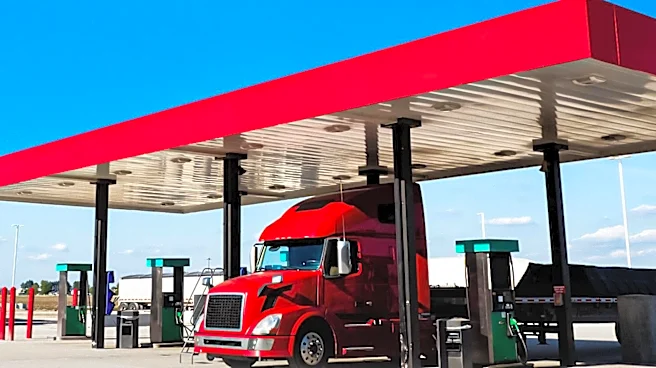
John Boyd Jr., a fourth-generation farmer from Virginia and president of the National Black Farmers Association, is facing significant financial strain due to record-high diesel prices. He reports paying approximately $7 a gallon for diesel, nearly double
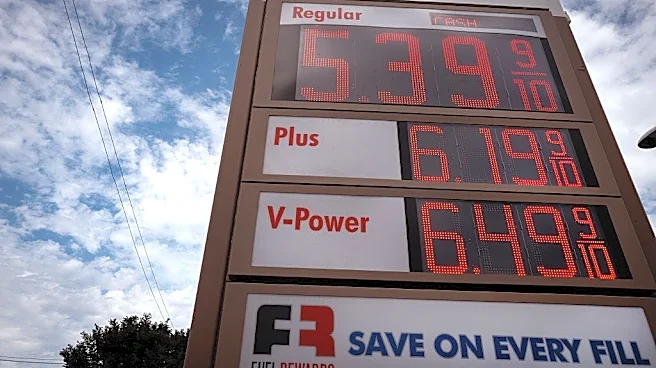
the cost from a year ago. The national average for diesel has climbed to over $6.51 a gallon, surpassing the previous record of $5.85 a gallon set in early September. Boyd describes this situation as a "national farm crisis," forcing him to reallocate funds from other farm expenses to cover fuel costs, a practice he likens to "robbing Peter to pay Paul." He notes that corn is currently selling for about $5 per bushel, leaving little room to absorb the extra expense of diesel needed for harvesting. This surge in diesel prices is attributed to a broader global fuel crunch, intensified by disruptions to oil shipments through the Middle East following recent international conflicts.
Why It's Important?
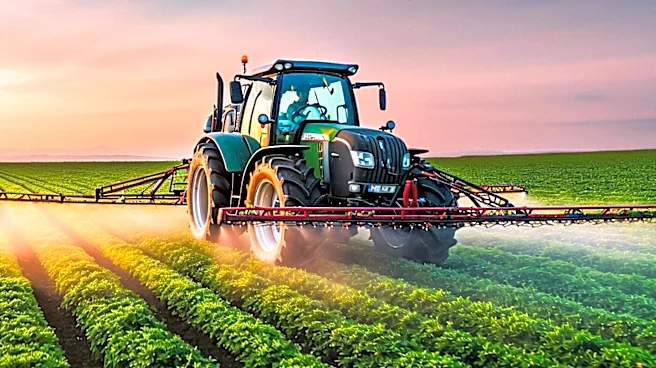
The escalating cost of diesel poses a critical threat to the profitability and sustainability of U.S. farming operations, particularly for smaller and independent farmers. Diesel is an indispensable input for agricultural machinery, from tractors to combines, making its price a direct determinant of production costs. When fuel expenses nearly double, as Boyd describes, it severely erodes already thin profit margins, especially when commodity prices like corn remain relatively stable. This financial pressure can lead to increased debt, reduced investment in farm improvements, and, in severe cases, the loss of farms. Boyd specifically highlights that over 400 Black farmers are at risk of losing their farms, underscoring the disproportionate impact on historically marginalized agricultural communities. The crisis threatens not only individual livelihoods but also the broader food supply chain, as farmers may be forced to reduce output or exit the industry, potentially leading to higher food prices for consumers.
What's Next?
Farmers like John Boyd Jr. will continue to grapple with the immediate challenge of covering soaring fuel costs, potentially by deferring other essential farm expenditures or seeking alternative financing. The agricultural sector will likely advocate for government intervention or relief measures to mitigate the impact of high diesel prices. This could include calls for subsidies, tax breaks, or other forms of financial assistance to help farmers remain viable. The long-term outlook for diesel prices will depend on global geopolitical stability and oil market dynamics, which remain uncertain. Farmers may also explore more fuel-efficient technologies or alternative energy sources, though such transitions often require significant capital investment. The situation could also prompt a broader discussion about the resilience of the U.S. food system and its vulnerability to external economic and geopolitical shocks.
Beyond the Headlines
The diesel price crisis for farmers extends beyond immediate economic concerns, touching upon issues of food security, rural community stability, and environmental sustainability. The struggle of farmers to afford essential inputs highlights the precarious nature of agricultural work and the often-overlooked costs associated with food production. For Black farmers, who have historically faced systemic disadvantages and land loss, this crisis exacerbates existing vulnerabilities, threatening to further diminish their presence in the agricultural landscape. This situation also underscores the urgent need for a national energy strategy that considers the specific needs of critical sectors like agriculture, balancing energy independence with affordability. Furthermore, it could accelerate the adoption of sustainable farming practices and renewable energy solutions, not just for environmental benefits, but as a means of reducing reliance on volatile fossil fuel markets and building a more resilient agricultural future.