
What's Happening?
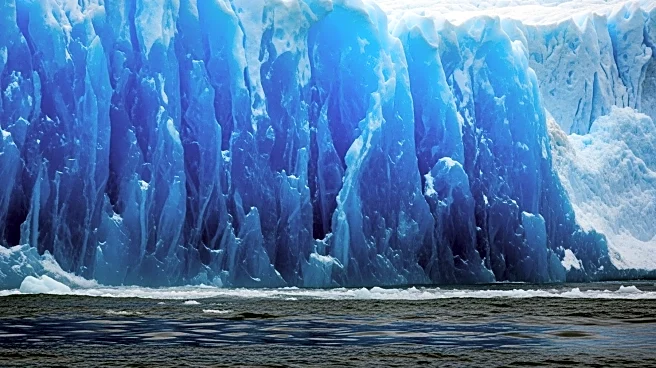
Researchers have issued a warning regarding the Thwaites Glacier in Antarctica, often referred to as the 'Doomsday Glacier,' due to its potential impact on global sea levels. A study published in the Journal
of Geophysical Research highlights that the Thwaites Eastern Ice Shelf, an extension of the glacier, is experiencing structural integrity issues due to ongoing fracturing. This fracturing has been observed over two decades, occurring in two phases: the expansion of long shear fractures followed by an increase in smaller fractures. The collapse of Thwaites Glacier could result in a sea level rise of approximately 65 centimeters, or over two feet. The ice shelf's baseline is expected to retreat at a rate of nearly one kilometer per year over the next four decades.
Why It's Important?
The potential collapse of the Thwaites Glacier is significant due to its implications for global sea levels. The Arctic is warming three times faster than the global average, largely due to human activities contributing to air pollution and rising temperatures. Since 1900, Arctic sea ice has declined by 60%, leading to rising sea levels. In the U.S., sea levels are projected to rise by 1 to 2 feet by 2050, with an increase in high tide flood days. The melting ice also threatens global food systems by damaging crops, potentially increasing grocery costs and spreading diseases. These changes could have widespread economic and social impacts, affecting coastal communities and global food security.
What's Next?
Efforts to mitigate Arctic ice melt involve monitoring and reducing pollution to slow climate warming. Government agencies have been using satellites to track sea ice for nearly 50 years, with NASA reporting low Arctic sea ice coverage. Mitigation strategies include reducing atmospheric pollution to prevent further ice melt. Public awareness and behavioral changes are crucial in addressing these climate issues. Continued research and monitoring are essential to understanding and responding to the evolving situation.
Beyond the Headlines
The situation with the Thwaites Glacier underscores the broader challenges of climate change and its impact on global ecosystems. The potential for increased sea levels and the associated risks to coastal communities highlight the need for comprehensive climate policies and international cooperation. The economic implications of rising sea levels, such as increased insurance costs and infrastructure adaptation, are significant. Additionally, the cultural and social dimensions of climate change, including displacement and changes in traditional ways of life, require attention and action.