







What's Happening?
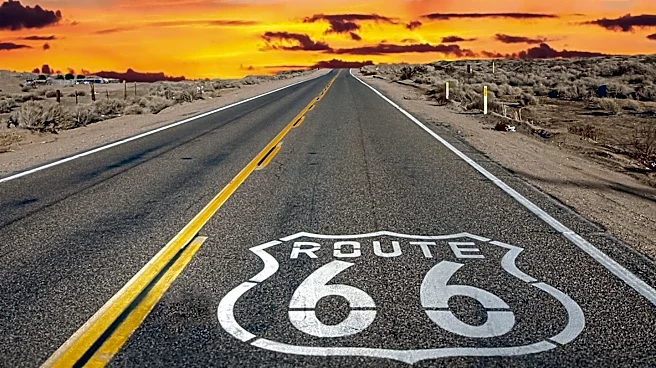
The historic Route 66, spanning approximately 2,400 miles from Chicago to Santa Monica, is preparing for its centennial celebration in 2026. This iconic highway, which traverses eight states, offers a unique blend of American history, diverse landscapes,
and roadside culture. Travelers are advised to plan for two to three weeks for a relaxed end-to-end journey, though shorter sections can be explored in 10-14 days or less. Essential planning includes mapping fuel stops, accommodation, attractions, and downloading offline maps, especially for rural areas with limited mobile coverage. The route encourages supporting independent diners, motels, museums, and shops to preserve its distinctive character and living heritage.
Why It's Important?
The upcoming centennial of Route 66 in 2026 underscores its enduring cultural and historical significance to the United States. As a symbol of American mobility and westward expansion, its preservation efforts are vital for maintaining a tangible link to the nation's past. The emphasis on supporting local businesses along the route highlights the economic impact of heritage tourism, providing crucial revenue for small towns and independent establishments that might otherwise struggle. This focus on local economies and historical conservation contributes to the unique identity of the U.S. travel landscape, attracting both domestic and international tourists and fostering a deeper appreciation for American heritage and the evolution of its transportation infrastructure.
What's Next?
As the 2026 centennial approaches, increased attention and resources are expected to be directed towards the preservation and promotion of Route 66. Travelers planning to experience the Mother Road should anticipate a surge in interest, making early booking for historic motels and attractions advisable. Preservation organizations and local communities will likely intensify their efforts to restore and maintain historic sites, potentially leading to new exhibits, events, and enhanced visitor experiences. The travel industry will also likely capitalize on the centennial, offering specialized tours and guides. For the U.S., this period will serve as a significant opportunity to celebrate and reinforce the cultural legacy of one of its most famous highways.
Beyond the Headlines
The enduring appeal of Route 66, particularly as it approaches its centennial, speaks to a deeper American narrative of freedom, exploration, and resilience. It represents more than just a road; it embodies a cultural phenomenon that has shaped national identity through literature, music, and film. The ongoing efforts to preserve its historic alignments and roadside attractions reflect a collective desire to safeguard tangible pieces of this narrative against modernization. This commitment to heritage conservation, often driven by local communities, highlights the power of grassroots movements in shaping national memory and promoting a sense of shared history, offering a unique lens through which to understand the evolution of American society and its relationship with the open road.