







What's Happening?
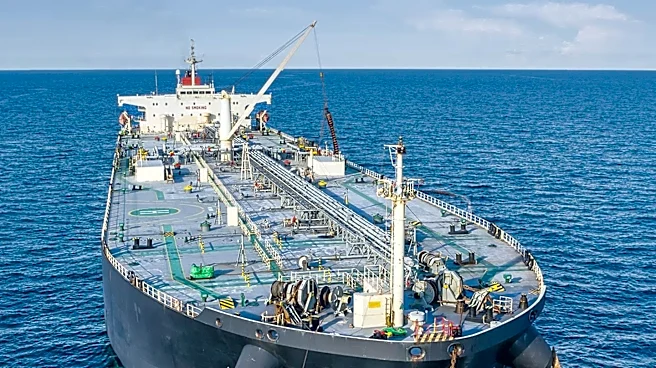
Iran has significantly increased its oil exports, selling over 40 million barrels since the U.S. lifted its naval blockade of Iranian ports. This development follows a memorandum of understanding signed on June 17 between the U.S. and Iran, which ended
nearly four months of conflict and reopened the Strait of Hormuz. The agreement includes a 60-day negotiation period to establish a permanent peace deal. During the blockade, Iran was unable to export oil, but the lifting of restrictions has allowed a surge in shipments through the strategic waterway. Iran is now selling its oil at a 20% premium compared to pre-war prices. The ceasefire has also led to a decrease in global oil prices, with Brent crude trading near $73 a barrel, down from a peak of $118 in April.
Why It's Important?
The resumption of Iranian oil exports is significant for global energy markets, as it contributes to a decrease in oil prices and alleviates supply constraints. The Strait of Hormuz is a critical chokepoint for global oil shipments, and its reopening ensures the continued flow of energy resources. This development also highlights the geopolitical dynamics in the region, as Iran asserts its control over the strait while negotiating terms with the U.S. The increase in Iranian oil exports could impact U.S. energy policy and international relations, particularly in terms of sanctions and diplomatic engagements with Iran.
What's Next?
The future governance of the Strait of Hormuz remains uncertain, as the current agreement allows toll-free transit for 60 days. Iran has emphasized its sovereignty over the strait, which could lead to further negotiations or tensions once the agreement period ends. The ongoing negotiations between the U.S. and Iran will be crucial in determining the long-term stability of oil exports and regional security. Additionally, the use of unfrozen Iranian assets, as mentioned by Iranian officials, could influence economic strategies and international trade relations.