





What's Happening?
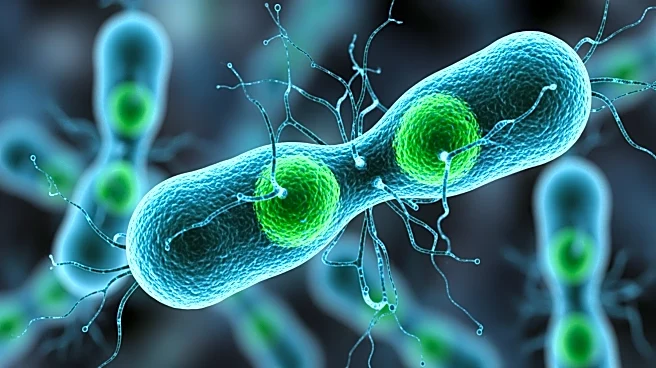
Researchers at Université de Montréal have discovered a previously unknown mechanism in bacterial reproduction that could lead to new antibiotic targets. The study, published in Nature Communications, reveals that bacteria strengthen the septum, the dividing
wall between two future cells, during the final moments of cell division. This process involves two key enzymes that work together to cleave and reinforce the cell wall, ensuring successful separation of the daughter cells. The research was led by Yves Brun, a professor in the Department of Microbiology, Infectiology and Immunology, and highlights a second phase of cell wall reinforcement that occurs precisely when the cells begin to divide. This discovery challenges the previous understanding that bacteria gradually break down the septum to allow cell separation.
Why It's Important?
The findings of this study have significant implications for the development of new antibiotics. Many current antibiotics, such as penicillin, target the bacterial cell division process. By identifying the enzymes involved in the newly discovered reinforcement mechanism, researchers can explore new strategies to disrupt bacterial growth. This is particularly crucial in the fight against antibiotic-resistant pathogens. The study's focus on Bacillus subtilis, a model organism, suggests that the principles discovered may apply to other Gram-positive bacteria, which include several human pathogens. As antibiotic resistance continues to rise globally, these insights could lead to the design of more effective treatments that are harder for bacteria to resist.
What's Next?
The research team plans to further investigate the molecular players involved in this bacterial division process. By understanding the coordination between the enzymes that cleave and reinforce the cell wall, scientists aim to develop drugs that can effectively disrupt this process. This could prevent proper cell separation, leaving bacteria unable to reproduce. The study opens up new avenues for antibiotic development, particularly against drug-resistant strains. Future research will likely focus on applying these findings to a broader range of bacteria and exploring the potential for clinical applications.
Beyond the Headlines
This discovery not only advances the scientific understanding of bacterial cell biology but also highlights the importance of basic research in uncovering novel therapeutic targets. The study underscores the complexity of bacterial survival mechanisms and the need for innovative approaches to combat antibiotic resistance. By revealing a critical vulnerability in bacterial reproduction, this research could lead to a paradigm shift in how antibiotics are developed and used, potentially reducing the impact of resistant infections on public health.