






What's Happening?
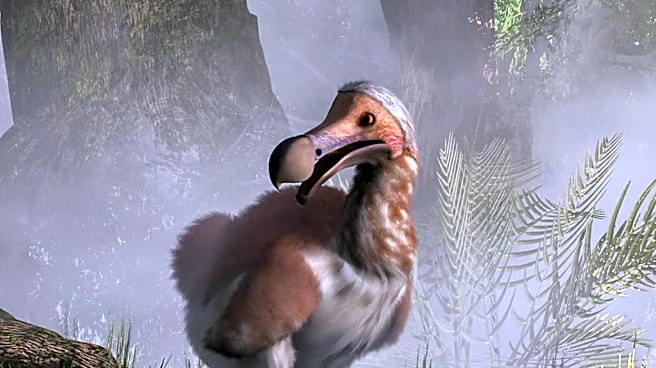
Colossal Biosciences is employing a new AI platform called GenoMorph to aid in its efforts to de-extinct the dodo. The company aims to bring back the dodo by editing the primordial germ cells (PGCs) of a nicobar pigeon, a close relative, to incorporate
dodo traits. A significant challenge lies in identifying and manipulating the numerous regulatory elements in the dodo genome that dictate its unique characteristics, such as its distinctive beak. For instance, over 650 regulatory elements are associated with beak size, and nearly 1,700 with beak thickness and breadth. The ancient DNA samples available are often fragmented, providing an imperfect record of which regulatory switches need to be activated or deactivated. The GenoMorph AI platform is designed to fill these gaps by learning how regulatory DNA shapes living birds and then identifying the specific genetic switches that contributed to the dodo’s anatomy.
Why It's Important?
The application of AI in de-extinction efforts represents a significant advancement in genetic engineering and conservation biology, with potential implications for U.S. scientific research and biotechnology industries. This initiative could pave the way for future projects aimed at restoring other extinct species, offering new tools for biodiversity preservation and ecological restoration. The development of platforms like GenoMorph demonstrates the growing capacity of AI to tackle complex biological data problems, accelerating research that would be prohibitively time-consuming for human scientists alone. Success in this endeavor could attract substantial investment into U.S. biotech firms specializing in gene editing and AI-driven biological research. Conversely, it also raises ethical and ecological questions about the potential impacts of reintroducing extinct species into modern ecosystems, which could spark public debate and influence regulatory frameworks for genetic manipulation and conservation.
What's Next?
Colossal Biosciences will continue its work on editing the PGCs of nicobar pigeons, leveraging the GenoMorph AI platform to refine the genetic modifications necessary to express dodo traits. The immediate next steps involve overcoming the challenges of precisely editing the vast number of regulatory elements in the dodo genome. The company also faces the practical hurdle of obtaining sufficient surrogate eggs, as nicobar pigeons are seasonal breeders and lay few eggs, making chicken eggs a more accessible, though less ideal, alternative for initial research. Future developments will likely include further refinement of the AI model, experimental gene editing in pigeon cells, and eventually, attempts to create viable dodo embryos. The progress of this project will be closely watched by the scientific community, conservationists, and the public, potentially influencing the trajectory of de-extinction science and its ethical considerations.
Beyond the Headlines
The dodo de-extinction project, powered by AI, delves into profound ethical and philosophical questions about humanity's role in shaping the natural world. It challenges traditional notions of conservation, moving beyond preservation to active biological resurrection. This endeavor could redefine our understanding of extinction, suggesting that some losses might be reversible with advanced technology. However, it also raises concerns about 'playing God' and the potential for unintended ecological consequences if de-extinct species are reintroduced into environments that have drastically changed since their original existence. The project highlights the increasing convergence of AI, genetics, and conservation, pushing the boundaries of what is scientifically possible and forcing a re-evaluation of our responsibilities towards biodiversity and the planet. The success or failure of this project could set a precedent for future interventions in natural evolutionary processes.