
What's Happening?
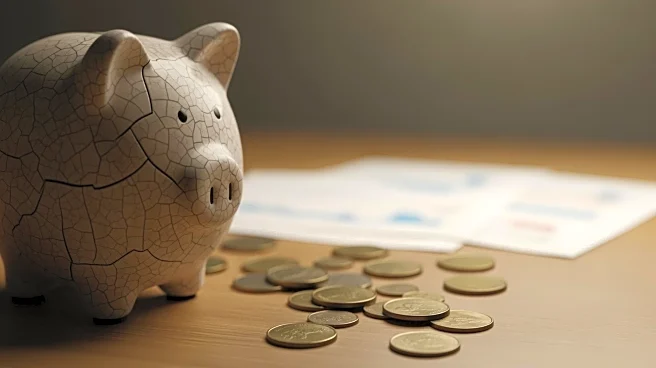
A recent report from the Federal Reserve Bank of New York indicates that 38.97% of Americans believe they will be financially worse off next year, marking the highest percentage recorded during President
Trump's terms. This sentiment reflects ongoing economic challenges, including inflation and rising costs of living, which have not been offset by wage gains. Financial experts attribute this pessimism to factors such as increased credit costs and the depletion of savings buffers established during the COVID-19 pandemic. Despite technical economic growth, many households feel the economy is not improving quickly enough to alleviate their financial burdens.
Why It's Important?
The perception of financial decline among a significant portion of Americans is a critical indicator of economic sentiment and can influence consumer behavior and policy decisions. This widespread pessimism may lead to reduced consumer spending, further impacting economic growth. Additionally, the sentiment reflects broader concerns about the effectiveness of current economic policies and the administration's handling of economic issues. The ongoing challenges of inflation and credit access highlight the need for targeted economic interventions to restore consumer confidence and stabilize household finances.
What's Next?
As the Federal Reserve and economic forecasters predict slower growth, households may continue to face conflicting narratives about the economy's future. This uncertainty could lead to increased scrutiny of government policies and pressure on policymakers to address the underlying economic issues. The administration may need to consider measures to improve credit access and address inflation to prevent further erosion of consumer confidence.