

What's Happening?
Spain has firmly denied claims from the White House that it has agreed to cooperate militarily with the United States in the ongoing conflict with Iran. This assertion was made by White House spokesperson Karoline Leavitt, who stated that Spain had changed
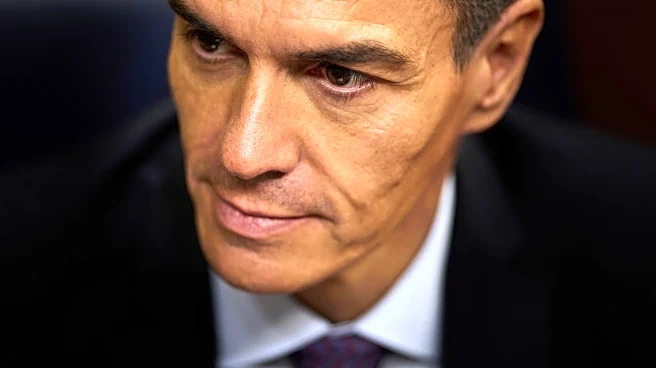
its stance and would now allow the use of its military bases for U.S. operations. However, Spanish officials, including Foreign Minister Jose Manuel Albares, have categorically rejected this claim, maintaining that Spain's position remains unchanged. Prime Minister Pedro Sánchez has been vocal in his opposition to the U.S. and Israeli military actions in Iran, emphasizing Spain's anti-war stance. This development follows President Trump's threat to sever trade ties with Spain, criticizing the country for its defense spending and labeling it as 'terrible.'
Why It's Important?
The disagreement between Spain and the United States highlights tensions within NATO and the broader international community regarding military interventions in the Middle East. Spain's refusal to cooperate with U.S. military efforts could strain diplomatic relations and impact trade between the two nations. This situation underscores the challenges faced by the U.S. in rallying international support for its military strategies, particularly in regions with complex geopolitical dynamics. Spain's stance also reflects broader European skepticism towards U.S. foreign policy under President Trump, potentially influencing other EU countries' positions on military cooperation and defense spending.
What's Next?
The ongoing diplomatic rift may lead to further discussions within NATO about member countries' roles and responsibilities in international conflicts. Spain's firm anti-war position could inspire similar stances from other European nations, potentially leading to a reevaluation of military alliances and strategies. The U.S. may need to engage in diplomatic efforts to mend relations with Spain and ensure continued cooperation on other fronts. Additionally, the situation could prompt discussions within the EU about a unified approach to Middle Eastern conflicts and defense policies.