








What's Happening?
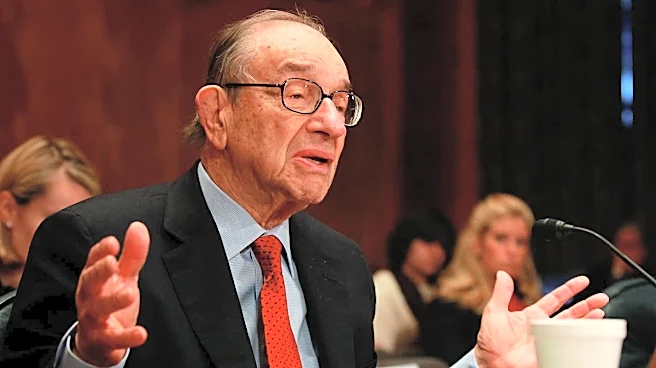
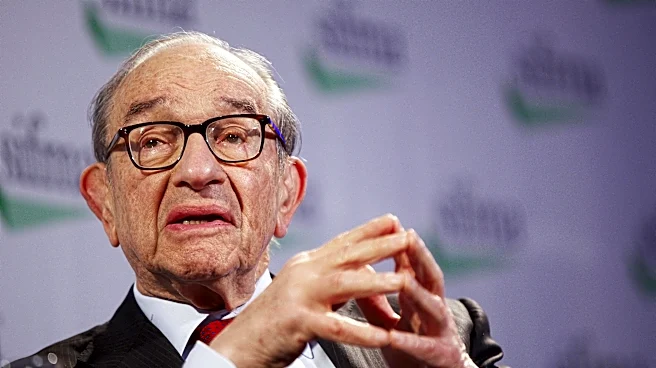
Alan Greenspan, the former chairman of the Federal Reserve, has died at the age of 100 due to complications from Parkinson's Disease. Greenspan, who was appointed by President Ronald Reagan in 1987, served as the Fed chairman until 2006, making his tenure
the second longest in the institution's history. Known for his influential role in shaping U.S. economic policy, Greenspan was often referred to as 'the Maestro' for his ability to navigate the economy through various booms and busts. His tenure included significant events such as the 1987 stock market crash and the dot-com bubble. Greenspan's approach to monetary policy, particularly his use of 'Fedspeak'—a deliberately complex language—was both praised and criticized. His policies are sometimes cited as contributing factors to the 2008 financial crisis, although he defended his actions in his memoir, 'The Age of Turbulence.'
Why It's Important?
Alan Greenspan's impact on the U.S. economy was profound, influencing monetary policy for nearly two decades. His leadership during periods of economic volatility helped stabilize markets, but his policies also faced criticism for potentially laying the groundwork for the 2008 financial crisis. Greenspan's tenure is a study in the balance of economic growth and inflation control, and his legacy continues to inform current economic policy debates. His approach to interest rates and market interventions has been both a model and a cautionary tale for subsequent Fed leaders. The passing of such a pivotal figure marks the end of an era in economic policy, prompting reflection on the long-term effects of his decisions on the U.S. and global economies.
What's Next?
In the wake of Greenspan's passing, there may be renewed discussions on the effectiveness and consequences of his policies. Current and future Federal Reserve leaders might revisit his strategies to address ongoing economic challenges, such as inflation and market stability. Additionally, Greenspan's death could lead to a reevaluation of the role of the Fed in preventing financial crises, potentially influencing future regulatory and policy decisions. As the economic landscape continues to evolve, Greenspan's legacy will likely serve as a reference point for both supporters and critics of his approach to monetary policy.
Beyond the Headlines
Greenspan's influence extended beyond economics into cultural and political realms. His relationship with prominent figures, such as his wife Andrea Mitchell, and his interactions with various U.S. presidents, highlight the intersection of economic policy and political dynamics. Greenspan's ability to maintain influence across different administrations underscores the non-partisan nature of effective economic leadership. His life and career also reflect broader themes of resilience and adaptation, as he navigated personal and professional challenges over a century of profound change.