



What's Happening?
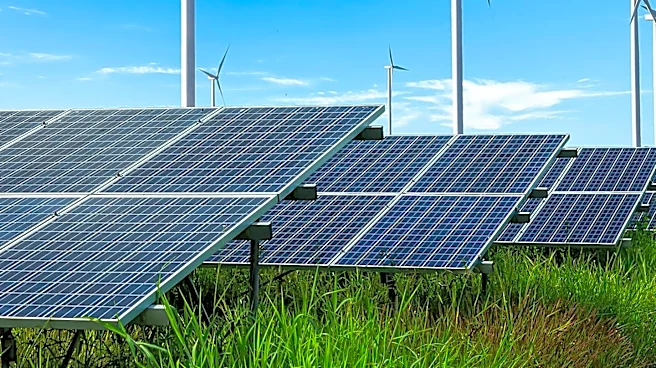
Northern Ireland's progress in adopting renewable energy has stagnated since 2020, despite nearly 50% of its electricity coming from renewable sources in 2025. The primary obstacle is not a lack of renewable generation capacity, but rather significant
limitations in the electricity grid's ability to transmit and store this energy. In 2024, renewable generators were curtailed 30% of the time because the grid could not absorb their output, leading to wasted energy. The existing North South Interconnector is at full capacity, preventing the transfer of surplus renewable energy to the Republic of Ireland and increasing reliance on gas-fired power stations for baseload power. Plans for a new interconnector, initially proposed in 2006, are now delayed until 2031, further exacerbating the issue. The domestic grid also suffers from underinvestment, a lack of forward planning, and a skills gap, hindering the efficient movement of electricity from generation points to demand centers, particularly in wind-rich areas.
Why It's Important?
The stagnation in Northern Ireland's renewable energy growth has significant implications for its ability to meet the statutory target of 80% renewable electricity consumption by 2030. The inability of the grid to handle existing renewable output leads to the curtailment of clean energy, increasing reliance on fossil fuels and potentially higher energy bills. This situation highlights a critical challenge faced by many regions transitioning to renewable energy: the need for substantial infrastructure upgrades to support intermittent sources like wind and solar. The delays in projects like the North South Interconnector not only impact Northern Ireland's energy independence and environmental goals but also affect the wider all-island Single Electricity Market, potentially increasing costs and hindering renewable shifts in the Republic of Ireland. The issue underscores the necessity of integrated planning and investment in both generation and transmission infrastructure for a successful energy transition.
What's Next?
Addressing Northern Ireland's renewable energy challenges will require sustained investment, faster planning processes, and political will. SONI's grid investment plan for 2023-32 includes significant upgrades to the domestic grid, but several key projects are already years behind schedule. The Department for the Economy is consulting on low-carbon hydrogen as a potential long-term storage solution, particularly with future large-scale offshore wind development in mind, though its economic viability remains a challenge. Efforts to increase international connections, such as the delayed North South Interconnector, are crucial for managing energy surpluses and demand across the island. Additionally, demand-side management strategies, including time-of-use tariffs and demand flexibility, could play a role in optimizing renewable energy utilization by encouraging consumers to use electricity when it is most abundant. However, these approaches may impose restrictions on consumer energy use.
Beyond the Headlines
The challenges faced by Northern Ireland in integrating renewable energy extend beyond technical and financial hurdles, touching upon broader societal and environmental considerations. The reliance on gas-fired power stations due to grid limitations underscores the complex interplay between energy security, environmental sustainability, and economic development. The debate around nuclear power, while not renewable, highlights the ongoing search for reliable low-carbon baseload power sources, with critics raising concerns about costs, construction times, and radioactive waste management. Furthermore, the environmental concerns associated with bioenergy, such as the sustainability of imported fuels and the impact of agricultural waste on biodiversity, illustrate the need for a holistic approach to renewable energy development that considers the full lifecycle and ecological footprint of different technologies. The resistance to projects like the compressed air energy storage site due to environmental concerns also points to the importance of public engagement and addressing local community impacts in large-scale infrastructure projects.